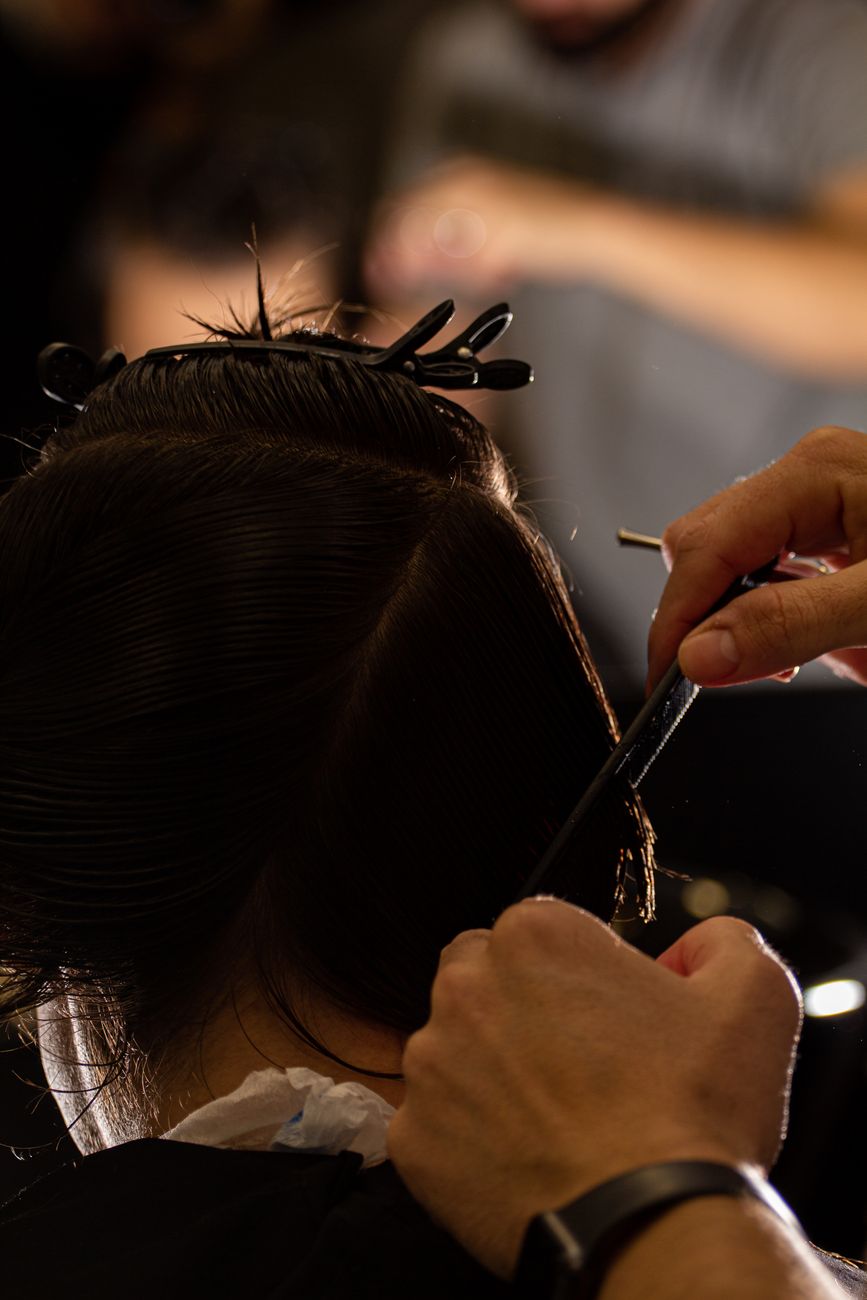
Professional haircutting is far more nuanced than simply shortening the hair. Behind every polished bob, soft layer, or customized fringe lies a series of intentional decisions made by your stylist. One of the most important choices involves determining whether to cut the hair wet or dry.
At Just For Hair Salon in Overland Park, KS, our stylists select techniques based on each client’s unique hair type, texture, styling habits, and desired outcome. Understanding the differences between dry cutting and wet cutting can provide valuable insight into why your stylist may approach your haircut differently from someone else’s.
What Is Wet Cutting?
Wet cutting refers to cutting the hair after it has been washed and thoroughly dampened. Traditionally taught in cosmetology education, this technique remains a cornerstone of professional haircutting.
When hair is wet, it often becomes:
- Easier to section
- More manageable to control
- Simpler to comb evenly
- Ideal for creating foundational shapes
- Well-suited for precision work
Many classic haircutting techniques begin with wet hair because it allows stylists to establish structure with consistency and accuracy.
Benefits of Wet Cutting
Wet cutting offers several advantages in professional salon settings.
Enhanced Precision
Damp hair can be sectioned cleanly, supporting detailed cutting techniques.
Improved Control
The added moisture helps reduce flyaways and allows the stylist to maintain tension throughout the haircut.
Efficient Shape Building
Creating strong perimeters and foundational layers is often easier when the hair is wet.
Consistency
Uniform distribution of moisture can support balanced cutting throughout the head.
These qualities make wet cutting a valuable technique for a wide variety of styles.
What Is Dry Cutting?
Dry cutting involves cutting the hair in its natural, dry state. This approach allows stylists to observe exactly how the hair behaves in real life.
Because the hair is dry, professionals can evaluate:
- Natural texture patterns
- Curl formation
- Volume distribution
- Growth direction
- Movement throughout the haircut
- How the client typically wears their hair
Dry cutting emphasizes customization and refinement.
Benefits of Dry Cutting
Dry cutting provides unique insights that may not be visible when the hair is wet.
Seeing the Final Result Immediately
Stylists can assess how the haircut looks in its finished state.
Enhanced Texture Awareness
Natural waves, curls, and cowlicks become more apparent.
Personalized Detailing
The haircut can be tailored precisely to the client’s individual characteristics.
Improved Weight Distribution
Strategic adjustments can be made based on how the hair naturally falls.
Dry cutting often supports highly customized outcomes.
When We Choose Wet Cutting
At Just For Hair Salon, wet cutting may be recommended for clients seeking:
Major Length Changes
Significant transformations often benefit from structured foundation work.
Precision Haircuts
Classic bobs, strong perimeters, and geometric shapes frequently begin on wet hair.
Uniform Layering
Establishing consistency throughout layered styles may be easier when the hair is damp.
Clients with Straight Hair
Wet cutting can offer excellent control when creating sleek silhouettes.
Ultimately, the decision depends on the individual’s goals and hair characteristics.
When We Choose Dry Cutting
Dry cutting may be especially beneficial for clients with:
Curly Hair
Natural curl patterns can vary significantly once dry.
Wavy Hair
Understanding how the texture settles supports personalized shaping.
Cowlicks or Growth Variations
Observing the hair’s natural behavior allows for strategic adjustments.
Texture-Focused Styles
Shags, pixie cuts, and highly individualized designs may benefit from dry refinement.
The technique helps stylists work with the hair rather than against it.
Why Many Haircuts Use Both Techniques
One common misconception is that stylists must choose either wet cutting or dry cutting exclusively.
In reality, many professional haircuts incorporate both methods.
A stylist may:
- Begin with wet cutting to establish the haircut’s structure.
- Blow-dry and style the hair.
- Finish with dry cutting to refine details and personalize the shape.
This combined approach allows for both technical precision and artistic customization.
Hair Texture Matters
Hair texture often influences technique selection.
Fine Hair
Wet cutting can support strong structure, while dry detailing may preserve fullness.
Thick Hair
Dry refinement can assist with weight management and movement.
Straight Hair
Precision techniques often shine during wet cutting.
Wavy Hair
Dry finishing can enhance the natural flow of the pattern.
Curly Hair
Observing curl formation in its dry state often leads to more predictable results.
Every head of hair deserves an individualized approach.
The Importance of Consultation
Choosing the right technique begins long before the scissors come out.
At Just For Hair Salon, consultations often include discussions about:
- Your daily styling routine
- Previous haircut experiences
- Maintenance preferences
- Hair texture concerns
- Lifestyle needs
- Long-term beauty goals
These conversations help us determine the most appropriate methods for achieving your desired outcome.
There Is No “Better” Technique
Clients occasionally ask whether dry cutting is superior to wet cutting.
The truth is that neither technique is universally better.
The most effective approach depends on factors such as:
- The haircut being created
- The client’s hair texture
- Desired styling outcomes
- Maintenance expectations
- The stylist’s professional assessment
Exceptional haircutting isn’t defined by one method—it’s defined by choosing the right method for the individual.
The Value of Professional Expertise
Professional stylists spend years developing the technical knowledge required to adapt techniques based on each client’s needs.
Understanding when to use wet cutting, dry cutting, or a combination of both contributes to:
- Greater personalization
- Improved haircut longevity
- Enhanced styling ease
- Better shape retention
- More flattering results
This expertise transforms a standard haircut into a customized experience.
Discover Customized Haircutting at Just For Hair Salon
At Just For Hair Salon, located at 1170 W. 135th St., Overland Park, KS 66221, United States, our experienced stylists combine advanced techniques with personalized consultations to create haircuts designed specifically for you. Whether your hair is straight, wavy, curly, fine, or thick, we’re committed to selecting the methods that best support your beauty goals and lifestyle.
Visit ophairsalon.com to schedule your consultation and experience the difference that thoughtful, individualized haircutting can make. At Just For Hair Salon, every technique is chosen with purpose—because your hair deserves a customized approach that celebrates its unique beauty.
Leave a Reply