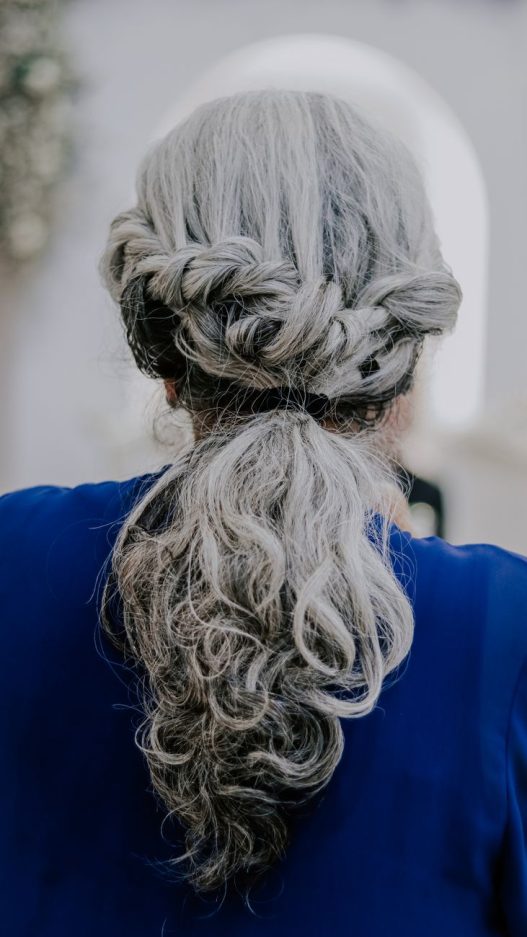
Natural gray and silver hair can look incredibly luminous, sophisticated, and dimensional. But over time, some gray strands may develop unwanted yellow or brassy tones, making silver hair appear dull rather than bright.
The good news is that yellowing doesn’t necessarily mean your natural gray is changing permanently. Environmental exposure, product buildup, heat, minerals, and everyday habits can all influence how silver hair looks.
At OP Hair Salon in Overland Park, our stylists can help you develop a customized maintenance routine for keeping natural gray hair clean-looking, shiny, and beautifully balanced.
Why Does Natural Gray Hair Turn Yellow?
Gray hair contains less melanin than naturally pigmented hair, which can make discoloration more noticeable.
Yellow tones can come from several sources, including:
- UV exposure
- Heat styling
- Hard-water minerals
- Product buildup
- Smoke and environmental pollutants
- Certain styling products
- Excessive warmth from surrounding colored hair
Because silver and white strands have little pigment of their own, even subtle external staining can become visible.
Natural Gray Isn’t Always One Uniform Shade
One of the most beautiful things about natural gray hair is its variation.
You may have a combination of:
- White strands
- Silver strands
- Charcoal gray
- Dark gray
- Salt-and-pepper sections
Some strands may appear cooler while others naturally look warmer.
The goal isn’t necessarily to make every strand identical. Maintaining a clean, balanced appearance while preserving your natural dimension is often more realistic.
Yellow vs. Warm Gray
Not every warm-looking gray is actually unwanted yellowing.
Some natural gray hair has subtle beige, champagne, or warmer undertones.
Your stylist can help determine whether the warmth is:
- Natural pigmentation
- Environmental staining
- Product buildup
- Mineral accumulation
- Tonal imbalance
Understanding the cause helps determine the appropriate solution.
Purple Shampoo Can Help Neutralize Yellow
Purple shampoo is one of the most common products recommended for silver and gray hair.
Purple sits opposite yellow on the color wheel, so violet pigments can visually neutralize unwanted yellow tones.
However, more purple isn’t necessarily better.
Overusing a highly pigmented shampoo can leave some porous white or silver strands looking:
- Lavender
- Violet
- Dull
- Unevenly toned
Use purple shampoo according to your stylist’s recommendations rather than automatically using it every time you wash.
How Often Should You Use Purple Shampoo?
There is no universal schedule.
Your ideal frequency depends on:
- How quickly your hair develops yellow tones
- Your porosity
- Water quality
- Product buildup
- Washing frequency
- Amount of natural white
- Desired silver tone
Some clients may need occasional toning, while others may require more regular maintenance.
Choose a Gentle Shampoo for Regular Washing
Your everyday shampoo doesn’t necessarily need to be highly pigmented.
A gentle, color-safe cleansing routine can help maintain the hair’s condition while allowing a separate toning product to be used when needed.
This approach gives you more control over the final tone.
Hard Water Can Affect Silver Hair
Minerals in water can accumulate on hair over time.
Depending on your water supply, deposits may contribute to:
- Dullness
- Yellow or brassy appearance
- Rough texture
- Reduced shine
If your silver hair suddenly looks different despite using the same products, mineral buildup may be worth considering.
Consider a Professional Clarifying or Chelating Service
If mineral or product buildup is suspected, a professional cleansing service may help remove deposits more effectively than simply adding more purple pigment.
Your stylist can determine whether your hair needs:
- Clarification
- Mineral removal
- Chelating treatment
- Tonal adjustment
- Conditioning afterward
The appropriate service depends on the cause of the discoloration.
Product Buildup Can Make Gray Hair Look Dull
Leave-in conditioners, oils, dry shampoo, styling creams, sprays, and other products can accumulate.
On silver hair, buildup may be especially visible because it can reduce the reflective quality that makes gray hair look luminous.
Use styling products intentionally and cleanse according to your hair and scalp needs.
Dry Shampoo Can Contribute to Dullness
Dry shampoo is useful for extending time between washes, but repeated use without appropriate cleansing can leave residue.
If your silver hair begins looking:
- Powdery
- Dull
- Yellowish
- Coated
consider whether product buildup could be contributing.
Heat Styling Can Affect Silver Hair
High heat can contribute to dryness and can influence how hair color appears.
Gray hair may already feel drier or more textured than your naturally pigmented hair.
Use heat protection before:
- Blow-drying
- Flat-ironing
- Curling
- Hot-brush styling
Keep temperatures appropriate and avoid repeatedly applying heat to the same sections.
Sun Exposure Can Change the Appearance of Gray
UV exposure can affect hair’s surface and may contribute to dryness and color changes.
If you’re outdoors frequently, consider:
- Wearing a hat
- Using UV-protective hair products
- Limiting prolonged direct exposure
These habits can help protect both shine and condition.
Chlorine and Swimming
Swimming pools can expose hair to chemicals that may affect its appearance.
Silver and white hair can sometimes show environmental discoloration more readily than darker hair.
Before swimming:
- Wet your hair with clean water.
- Consider a protective leave-in product.
- Wear a swim cap when practical.
- Rinse thoroughly afterward.
Your stylist can recommend a routine appropriate for frequent swimmers.
Moisture Is Essential for Silver Hair
Natural gray hair can sometimes feel coarser or drier because changes in the hair fiber can affect its texture.
Regular conditioning can improve:
- Softness
- Manageability
- Shine
- Detangling
- Overall appearance
Consider using a moisturizing conditioner regularly and a deeper treatment when your hair needs additional conditioning.
Don’t Overload Gray Hair With Heavy Oils
Oils can improve softness and shine, but too much product can weigh down fine silver hair.
Heavy buildup may also make gray hair look less reflective.
Use lightweight products when possible and adjust the amount according to your hair’s density and texture.
Purple Conditioner Can Provide Gentler Toning
If shampooing with a strongly pigmented purple cleanser feels too intense, a violet-toned conditioner may offer another option.
The amount of pigment deposited depends on the product and how long it remains on the hair.
Your stylist can help you determine which approach fits your hair.
Professional Glossing for Natural Gray
Natural gray hair doesn’t always need permanent color.
A professional gloss or toner may be used when appropriate to:
- Refine unwanted warmth
- Enhance silver tones
- Add shine
- Improve tonal consistency
The service should be customized so that the natural gray pattern remains visible.
Don’t Assume Every Gray Needs Toner
If your natural silver looks beautiful and balanced, adding toner simply because gray hair exists may be unnecessary.
Professional gray maintenance should address an actual tonal concern rather than changing your natural color without a reason.
Your Hair’s Porosity Changes How It Holds Pigment
Porous sections may absorb violet or other toning pigments more readily than less porous areas.
This can result in uneven tonal intensity.
If you notice some strands turning purple while others remain yellow, your stylist can help adjust your toning strategy.
Protect Your Silver Between Salon Visits
A simple maintenance routine can include:
Regular cleansing → conditioning → occasional toning → buildup management → heat protection
The exact frequency depends on your hair and lifestyle.
A Simple Weekly Silver Hair Routine
Wash
Use a gentle shampoo suited to your scalp and hair.
Condition
Apply conditioner through the lengths and ends.
Tone
Use a purple or violet-toned product only when needed.
Treat
Add a moisturizing treatment if your hair feels dry.
Protect
Use heat protection before styling.
Assess
Pay attention to whether yellowing, buildup, or dryness is returning.
What If Your Gray Looks Yellow After Washing?
If yellow tones suddenly become more obvious, consider:
- Water quality
- Shampoo residue
- Styling buildup
- Dry shampoo
- Heat exposure
- Environmental exposure
If the issue persists, a professional assessment can help identify the source rather than simply increasing purple shampoo use.
Don’t Try to Remove Stubborn Buildup With Harsh Home Remedies
Online advice may recommend household ingredients or aggressive cleansing methods for removing yellow tones.
These approaches can be unpredictable and may leave gray hair dry or irritated.
A professional cleansing treatment can be a more controlled option when buildup is suspected.
Silver Hair and Haircuts Work Together
A well-shaped haircut can make natural gray look even more dimensional.
Layers, short cuts, textured shapes, and face-framing pieces can help light reflect differently across the hair.
Your stylist can consider both your color pattern and haircut when creating your overall look.
Embrace the Natural Dimension
Natural gray is rarely a single flat shade.
The combination of silver, white, charcoal, and darker strands creates dimension that artificial color may struggle to reproduce.
Maintenance should enhance that variation rather than automatically trying to make every strand icy white.
When to See Your Stylist
Consider a professional appointment if:
- Yellowing persists despite home care.
- Your hair feels coated.
- Silver looks unusually dull.
- Toning products aren’t working.
- Some areas are purple while others are yellow.
- Your hair feels unusually dry.
- You want a brighter or cooler silver appearance.
Your stylist can determine whether the problem is buildup, tone, condition, or a combination.
Questions to Ask Your Stylist
At your next appointment, ask:
- Is my yellowing caused by minerals or product buildup?
- How often should I use purple shampoo?
- Would a professional gloss help?
- Is my hair too porous for frequent toning?
- Should I use a clarifying or chelating product?
- What conditioner is best for my gray?
- How can I protect my silver from heat and sun?
Why Choose OP Hair Salon?
At OP Hair Salon in Overland Park, we help clients maintain natural gray and silver hair with personalized color and care strategies.
Whether you’re dealing with yellow tones, dullness, mineral buildup, dryness, or uneven toning, our stylists can evaluate your hair and recommend an approach that supports your natural silver rather than masking it unnecessarily.
From professional glossing and tonal refinement to customized home-care recommendations, the goal is simple: healthy-looking, luminous gray hair that feels intentional and beautifully maintained.
Ready to refresh your natural silver? Schedule a consultation at OP Hair Salon in Overland Park to discuss your gray-hair maintenance routine and learn how to keep unwanted yellow tones under control.
Leave a Reply