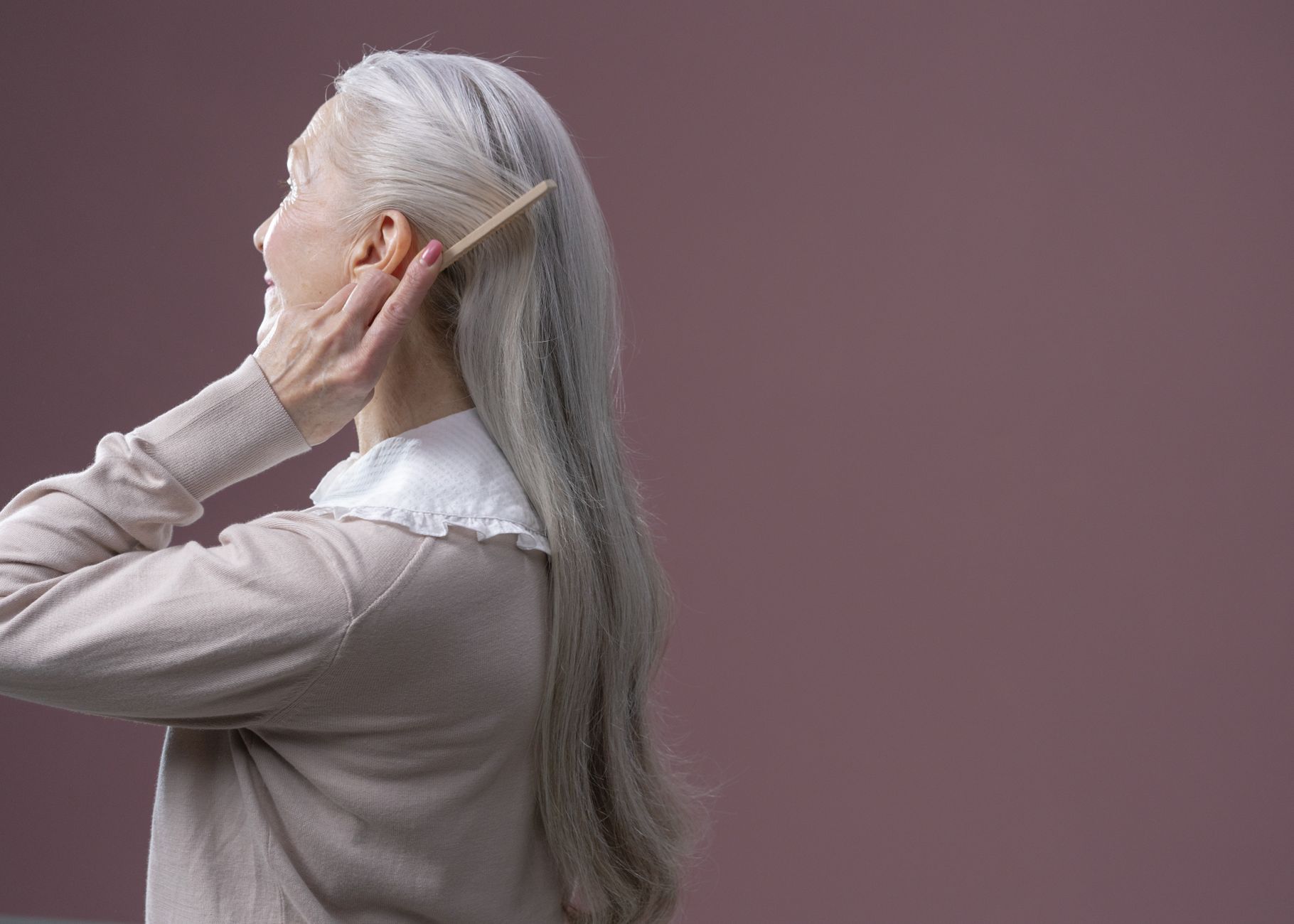
Silver and gray hair can be incredibly sophisticated, but an all-over silver shade can sometimes look visually flat or lack depth. Lowlights can add subtle dimension to gray hair while preserving its natural silver character, creating a more dynamic and blended appearance.
Instead of covering gray completely, lowlighting allows a stylist to strategically introduce deeper tones between lighter strands. The result can be soft, dimensional, and much easier to customize than traditional all-over gray coverage.
At OP Hair Salon in Overland Park, our stylists can create customized lowlights for natural gray, silver, white, or gray-blended hair based on your existing color, desired depth, skin tone, and maintenance preferences.
What Are Lowlights?
Lowlights are strategically placed strands or sections of hair colored slightly darker than the surrounding hair.
While highlights add lighter pieces, lowlights introduce depth.
For silver and gray hair, this can create a combination of:
Silver + white + gray + darker dimensional pieces
The result can look more natural and visually interesting than one uniform shade.
Why Add Lowlights to Gray Hair?
Natural gray hair is rarely one single color.
It can contain:
- White strands
- Silver strands
- Darker gray
- Salt-and-pepper areas
- Natural brunette or blonde pigment
Lowlights can enhance this natural variation instead of eliminating it.
Lowlights vs. Full Gray Coverage
These services have different goals.
Full Gray Coverage
Designed to cover gray with a selected artificial color.
Gray Blending
Designed to soften the contrast between gray and pigmented hair.
Lowlights
Designed to add darker dimension among lighter strands.
If you love your silver but feel it looks flat, lowlights may be an option worth discussing.
What Colors Work With Silver Hair?
The ideal lowlight shade depends on the existing silver and natural hair color.
Possible options include:
- Soft charcoal
- Cool taupe
- Mushroom brown
- Ash brown
- Neutral brunette
- Smoky beige
- Deep silver
- Soft graphite
The goal isn’t necessarily to create dramatic contrast.
Subtle differences in depth often produce the most natural-looking result.
Cool Lowlights for Silver Hair
Cool-toned lowlights can complement naturally silver or white hair beautifully.
Examples include:
- Ash brown
- Mushroom
- Smoky gray
- Graphite
- Cool taupe
These shades can reinforce the cooler character of silver hair.
Neutral Lowlights for Gray Hair
Neutral lowlights provide versatility.
They can add depth without making the hair strongly warm or cool.
Neutral options may include:
- Natural brown
- Beige brown
- Soft taupe
- Balanced brunette
This can be useful when your gray contains both cool and neutral characteristics.
Can Warm Lowlights Work With Gray Hair?
Yes, but they require careful customization.
Soft warmth can create beautiful contrast against silver.
Potential options include:
- Soft beige
- Neutral chestnut
- Muted caramel
- Warm taupe
Strong orange, copper, or red may overpower natural silver unless that contrast is specifically desired.
How Lowlights Create Dimension
Imagine a solid silver canvas.
Adding slightly darker strands creates visual depth:
Light silver → medium gray → darker gray
Your eye perceives variation, making the hair appear more dimensional.
This can be especially effective when paired with a layered haircut or natural movement.
Lowlights Can Make Thin Hair Look More Dimensional
Silver hair isn’t automatically thin, but some clients have fine or low-density hair.
A completely uniform light color can sometimes make fine hair appear visually flatter.
Strategic lowlights can create contrast that gives the appearance of greater depth.
The placement should remain subtle so the hair doesn’t look overly striped.
Lowlights for Salt-and-Pepper Hair
If you already have a natural salt-and-pepper pattern, lowlights can enhance the darker portions rather than covering the gray.
This can preserve the natural character of your hair while making the overall color look more intentional.
Lowlights for Nearly White Hair
Very white hair can sometimes benefit from soft gray or taupe dimension.
Rather than introducing a strong brunette, your stylist may use a shade only slightly deeper than the surrounding white.
This creates a subtle shadow effect.
Lowlights for Darker Gray Hair
If your natural gray is mixed with darker strands, the stylist can work with the existing pattern.
Instead of adding dramatically darker color, subtle enhancement can emphasize the natural variation.
Lowlights Around the Face
Face-framing placement can dramatically affect how gray hair looks.
Your stylist may strategically place lighter and darker sections around the face to create:
- Softness
- Definition
- Contrast
- Brightness
The placement should complement your haircut and facial features.
How Lowlights Work With Haircuts
Haircut shape can influence where lowlights look most effective.
For example, layered hair can benefit from dimensional placement throughout the layers.
A bob may look beautiful with subtle depth concentrated around the perimeter or underneath sections.
The color should work with the haircut rather than being treated separately.
Lowlights and Natural Gray Grow-Out
One major benefit of strategically placed lowlights is that they can create a softer transition as hair grows.
However, the maintenance requirements depend on how much artificial color is used and where it is placed.
A subtle, blended approach can generally be easier to maintain than high-contrast dark streaks.
Lowlights vs. Highlights for Gray Hair
Both techniques can create dimension.
Highlights
Add lighter pieces.
Lowlights
Add darker pieces.
Combined Approach
Some clients benefit from both.
For example:
Natural silver + soft highlights + subtle lowlights
can create a highly dimensional result without completely changing the natural gray.
Why Overly Dark Lowlights Can Be a Problem
Very dark lowlights may create harsh contrast against silver hair.
They can also become more noticeable as the hair grows.
For a softer result, many clients benefit from choosing a lowlight shade that is only moderately deeper than their natural gray.
How Porosity Affects Lowlights
Previously lightened or highly porous hair may absorb darker pigments differently.
Porous areas can sometimes grab color more intensely.
This may make the lowlights appear:
- Too dark
- Too cool
- Uneven
- More opaque than intended
Your stylist can adjust the formula and application based on the condition of your hair.
Why Hair History Matters
Tell your stylist if you’ve previously used:
- Box dye
- Permanent color
- Demi-permanent color
- Bleach
- Highlights
- Toners
- Fashion colors
- Henna
Previous pigment can influence how new lowlights develop.
Lowlights for Gray-Blending Clients
If you’re transitioning away from full gray coverage, lowlights can sometimes help create a more intentional blend.
Instead of completely covering the silver, the stylist can introduce strategically placed depth that connects your natural and colored hair.
Can Lowlights Cover Gray?
Not exactly.
Lowlights are primarily a dimension technique, not a universal gray-coverage service.
If your goal is complete coverage of resistant gray, a dedicated gray-coverage formula may be more appropriate.
However, lowlights can complement gray coverage or blending.
How Often Do Silver Lowlights Need Maintenance?
The timeline depends on:
- Hair growth
- Placement
- Contrast
- Color type
- Desired appearance
- Natural gray percentage
Subtle lowlights may remain attractive for several weeks or months, while high-contrast placement may require more frequent maintenance.
Your stylist can recommend a schedule based on your specific result.
Can a Gloss Refresh Gray Lowlights?
A gloss can be useful for maintaining tonal balance.
It may help:
- Refresh faded tones
- Add shine
- Refine warmth
- Soften unwanted brassiness
- Enhance silver
- Maintain overall tonal consistency
However, a gloss doesn’t replace the dimensional placement created by lowlights.
Preventing Yellow Tones in Silver Hair
Silver hair can sometimes develop unwanted yellow tones due to:
- Product buildup
- Environmental exposure
- Heat
- Minerals
- Natural oxidation
- Certain styling products
A professional can help determine whether clarifying, toning, or a specialized maintenance routine is appropriate.
Purple Shampoo and Lowlights
Purple shampoo can help neutralize yellow tones in some silver and blonde hair.
But overuse can make certain silver shades appear overly cool or dull.
It can also affect the appearance of lighter dimensional pieces differently from darker lowlights.
Use it according to your stylist’s recommendation.
Home Care for Dimensional Gray Hair
To preserve your lowlights and silver tones:
- Use color-safe shampoo.
- Condition regularly.
- Avoid excessive heat.
- Use heat protection.
- Protect hair from prolonged UV exposure.
- Follow your stylist’s toning recommendations.
- Avoid repeated at-home color applications.
Gentle maintenance can help preserve both the light and dark dimensions.
What Happens During a Silver Lowlighting Appointment?
1. Consultation
You and your stylist discuss your desired level of dimension.
2. Color Assessment
The stylist examines your natural silver, gray, white, and pigmented strands.
3. Hair History Review
Previous color and chemical services are considered.
4. Shade Selection
A lowlight tone is selected to complement your existing gray.
5. Strategic Placement
The stylist places darker pieces where they will create the most natural-looking depth.
6. Processing
The color is processed according to the professional color system.
7. Rinse and Refine
The stylist evaluates the result and may use a gloss or toner if needed.
8. Styling
The finished style reveals how the dimensional color interacts with your haircut.
What Makes Professional Placement Important?
Lowlights aren’t simply random darker pieces.
Placement affects how the color looks when the hair is:
- Worn down
- Curled
- Straightened
- Pulled into a ponytail
- Parted differently
A professional stylist can strategically place depth so the result looks natural in everyday styling.
Lowlights Can Be Customized for Your Lifestyle
If you want minimal maintenance, your stylist can create:
- Soft contrast
- Blended placement
- Subtle depth
- Natural-looking transitions
If you prefer a more dramatic result, stronger contrast can be incorporated.
The technique can be adjusted to your preferences.
Common Silver-Lowlighting Mistakes
Choosing a Shade That’s Too Dark
This can make silver hair look striped.
Adding Too Much Warmth
Strong orange or red can fight against natural silver.
Using One Formula Everywhere
Different areas may require different treatment.
Ignoring Porosity
Porous ends may absorb pigment more intensely.
Overusing Permanent Color
Repeated color on the same sections can create buildup.
Treating Gray as One Uniform Color
Natural silver usually contains significant variation.
Questions to Ask Your Stylist
Before your appointment, ask:
- Would lowlights complement my natural gray?
- Should they be cool, neutral, or slightly warm?
- How much contrast would look natural?
- Would highlights and lowlights together work better?
- How often will I need maintenance?
- Can we keep most of my natural silver visible?
- Will my existing color history affect the result?
Is Silver Lowlighting Right for You?
Lowlights may be worth considering if:
- Your silver hair looks flat
- You want more dimension
- You don’t want full gray coverage
- You want to preserve natural gray
- Your salt-and-pepper pattern needs more definition
- You want a softer transition between gray and colored hair
If you love your gray but want more visual depth, lowlighting can be an elegant middle ground.
The Goal Is Dimension, Not Disguising Gray
Beautiful silver hair doesn’t have to be completely uniform.
Strategic lowlights can enhance the natural variation already present in gray and white hair.
The ideal result may look like:
Silver + white + soft gray + subtle depth
rather than one solid color.
Why Choose OP Hair Salon?
At OP Hair Salon in Overland Park, our stylists create customized gray-blending, silver-enhancing, and dimensional color services designed around each client’s natural hair.
We consider your gray pattern, natural depth, skin tone, hair history, porosity, haircut, and maintenance goals before selecting a lowlight formula and placement strategy.
Whether you want subtle salt-and-pepper dimension, soft charcoal depth, a more sophisticated silver blend, or a customized combination of highlights and lowlights, we can help create a result that feels natural and intentional.
Want more dimension without giving up your natural silver? Schedule a consultation at OP Hair Salon in Overland Park to explore whether customized lowlights could enhance your gray hair.
Leave a Reply