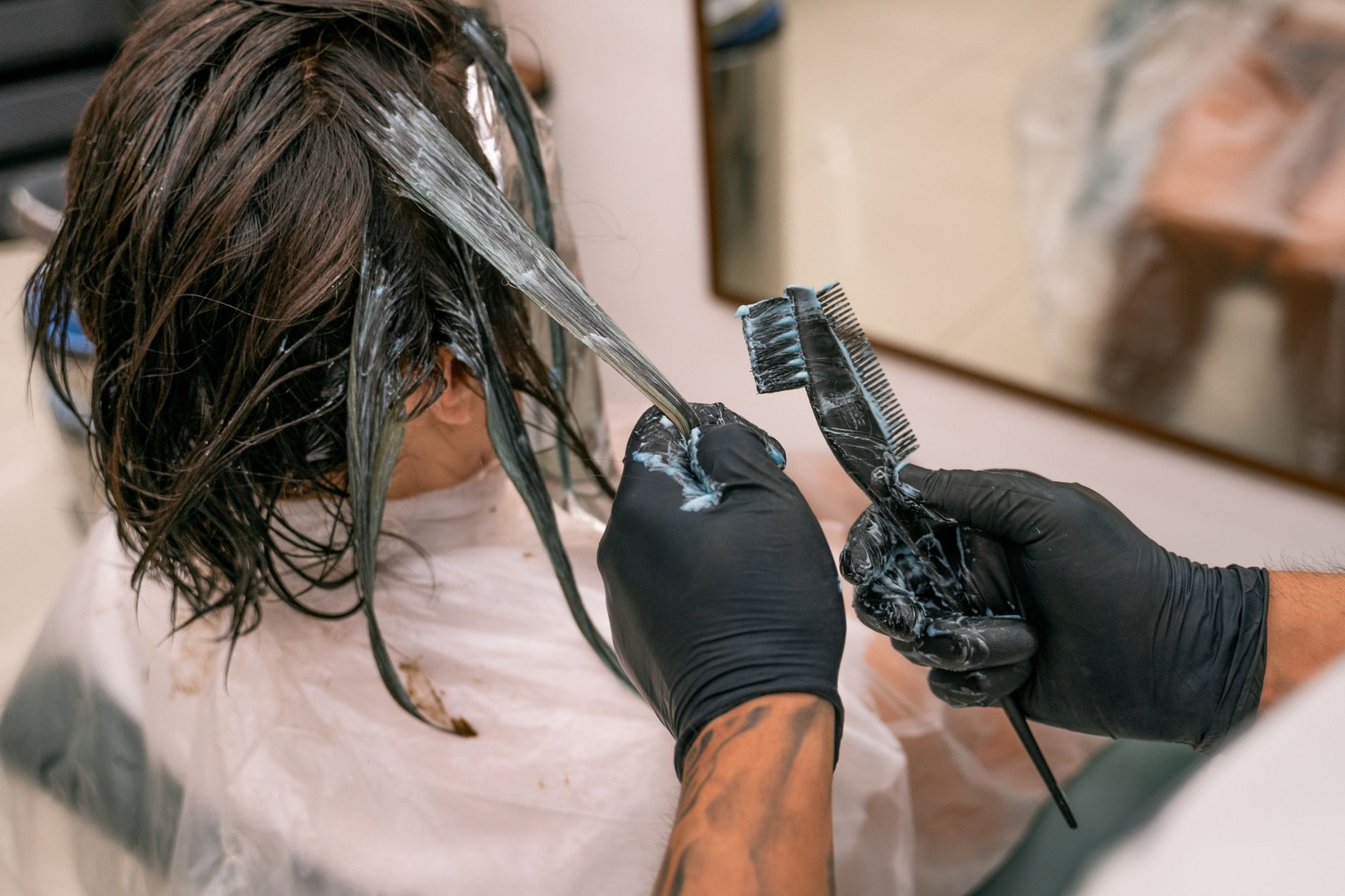
Going from dark artificial color to a lighter shade can be one of the most complicated hair-color transformations. If you’ve repeatedly colored your hair dark brown or black, simply applying a lighter dye usually won’t create the blonde, caramel, or lighter brunette you want.
Color does not reliably lift previously deposited color. Moving lighter often requires a carefully planned combination of pigment removal, lightening, toning, and maintenance.
At OP Hair Salon in Overland Park, our stylists evaluate your color history, existing pigment, porosity, elasticity, and desired result before determining what level of lightening is realistically possible.
Can You Lighten Dark Dyed Hair?
Sometimes—but the answer depends heavily on your color history.
There is a major difference between:
- Natural dark hair
- One application of permanent dark color
- Multiple layers of dark box dye
- Black color applied repeatedly
- Dark color over previously bleached hair
- Direct or fashion pigments
The more artificial pigment present, the more complicated the process becomes.
Why Lighter Dye Doesn’t Usually Make Dark Dyed Hair Lighter
A common misconception is:
Dark brown dye + lighter brown dye = lighter brown hair
Previously colored hair generally does not respond that way.
A lighter color formula isn’t a reliable way to remove darker artificial pigment.
If your goal is to significantly lighten previously colored hair, your stylist may need to reduce the existing pigment before attempting to create the lighter result.
What Happens When Dark Hair Is Lightened?
As dark hair becomes lighter, underlying warm pigments become increasingly visible.
Depending on the starting level, the hair may move through stages such as:
Black → red → red-orange → orange → yellow-orange → yellow
This warmth is a normal part of the lightening process.
The challenge is controlling that warmth while maintaining the condition of the hair.
What Is Color Removal?
Professional color-removal services are designed to reduce certain types of artificial color pigment.
Depending on the product and color history, a remover may help break down or reduce artificial oxidative pigment without functioning exactly like bleach.
However, color removers don’t necessarily return hair to its original natural color.
The result depends on what is underneath the artificial color.
Color Remover vs. Lightener
These are not interchangeable.
Color Remover
Generally focuses on reducing artificial color pigment.
Lightener
Can lift both natural and artificial pigment and can produce a greater amount of lightening.
A stylist may use one, the other, or a carefully planned combination depending on the hair.
Why Dark Box Dye Can Be Especially Difficult
Repeated box-dye applications can create multiple layers of pigment.
For example:
Application 1 → Application 2 → Application 3 → Application 4
Each additional application can add more pigment to the hair.
When you eventually want to go lighter, the stylist may encounter different levels of buildup from roots to ends.
The Ends May Be Much Darker Than the Roots
This is common when dark color has repeatedly been applied from roots through ends.
The roots may contain fewer layers of artificial pigment while the ends contain years of accumulated color.
This can create a challenging situation where:
- Roots lighten faster
- Mid-lengths lighten differently
- Ends remain dark
- Warmth appears unevenly
Why a Strand Test Can Be Important
A strand test can provide valuable information before a major color correction.
Your stylist can evaluate:
- How the artificial pigment responds
- How much lightening is possible
- What underlying warmth appears
- How the hair handles the process
- Whether the desired target is realistic
This can help prevent unrealistic expectations.
What Your Stylist Looks At Before Lightening
A professional consultation may evaluate:
- Natural hair level
- Artificial color level
- Number of previous color applications
- Box-dye history
- Previous bleaching
- Highlights
- Henna
- Fashion colors
- Porosity
- Elasticity
- Breakage
- Density
- Desired final shade
Your complete color history matters.
Why Honesty About Color History Matters
Always tell your stylist about previous color services, even if they happened months or years ago.
Mention:
- Box dye
- Permanent color
- Demi-permanent color
- Bleach
- Highlights
- Color removers
- Henna
- Fashion color
- At-home toners
Hidden color history can make the result more unpredictable.
Can Black Box Dye Become Blonde?
It can be possible in some situations, but platinum or very light blonde may require multiple sessions.
The amount of artificial pigment, hair condition, previous lightening, and desired blonde level all affect the timeline.
A professional may recommend a gradual transformation rather than attempting maximum lift in one appointment.
Can Dark Brown Dye Become Caramel?
Caramel may be a more realistic intermediate target for some clients.
A stylist may be able to create a gradual progression toward:
- Warm caramel
- Honey brown
- Bronde
- Light brunette
- Dimensional brown
The exact result depends on how the existing dark pigment responds.
Can Dark Dye Become Ash Blonde?
This can be significantly more complicated.
Dark artificial pigment may expose strong warm tones during lightening.
Creating an ash blonde requires reaching an appropriate underlying level before the final tone can be neutralized.
Trying to force an ash result before the hair is light enough can lead to muddy or uneven color.
Can Dark Dye Become Red or Copper?
Warm shades may sometimes be more achievable because they can work with the underlying warmth revealed during lightening.
However, the stylist still needs to control the underlying pigment and create an even foundation.
Why Multiple Sessions May Be Necessary
A gradual approach can provide opportunities to:
- Remove or reduce artificial pigment
- Evaluate the hair after each stage
- Correct uneven areas
- Improve color consistency
- Maintain elasticity
- Adjust the target shade
- Avoid excessive chemical stress
The safest route isn’t always the fastest route.
What Happens During the First Appointment?
A first appointment may focus on reducing artificial pigment and establishing a more workable base.
Depending on your starting point, you might leave with:
- A lighter brunette
- Warm brown
- Copper
- Caramel
- Bronde
- A dimensional intermediate shade
That doesn’t mean the service failed.
It may be the first stage of the transformation.
Why Warmth Isn’t Always a Bad Result
Many clients are surprised when dark dye removal reveals red, orange, or copper.
This is expected during many lightening processes.
Your stylist can use toning and color placement to make the warmth look intentional while continuing toward a lighter target over time.
What If the Color Becomes Orange?
Orange is a common stage when dark hair is lightened.
Depending on the desired result, your stylist may:
- Tone the hair
- Adjust the target shade
- Continue lightening when appropriate
- Add dimensional color
- Create a warmer brunette or caramel result
The correct solution depends on the level and condition of the hair.
What If the Hair Becomes Uneven?
Uneven lightening is common when there are different amounts of artificial pigment throughout the hair.
Your stylist may need to work selectively on:
- Dark bands
- Resistant ends
- Previously lightened sections
- Overlapping color
- Different porosity zones
A full-head application of the same formula may not be appropriate.
Color Correction Is Often About Strategy
A successful transformation may involve several techniques rather than one product.
For example:
Pigment reduction → selective lightening → toning → glossing → maintenance
Each stage has a different purpose.
Why Porosity Matters
Previously colored or lightened hair may have varying porosity.
Highly porous areas can:
- Absorb pigment quickly
- Release color unpredictably
- Process differently
- Become darker or cooler
- Fade faster
A professional can adjust application and formulation according to these differences.
Protecting Hair Integrity During Lightening
Hair condition should be evaluated throughout the process.
Your stylist may monitor:
- Elasticity
- Strength
- Porosity
- Breakage
- Texture
- Overall condition
If the hair isn’t ready for additional lightening, a professional may recommend waiting or choosing a less aggressive target.
Bond-Supporting Treatments May Be Recommended
Depending on the service and hair condition, your stylist may recommend a bond-supporting or conditioning treatment.
These services can be incorporated into a color plan when appropriate.
They don’t make hair invulnerable to chemical processing, but they may support a healthier-feeling result.
What If You Have Previously Bleached Hair Under the Dark Dye?
This can make correction especially complicated.
Some sections may be:
Previously lightened → covered with dark color
while other sections may be:
Natural → covered with dark color
These areas can respond very differently during color removal.
Henna and Other Nontraditional Color History
If you’ve used henna or other nontraditional coloring products, tell your stylist before lightening.
The presence of certain pigments or unknown formulations can affect the correction process and may require additional caution.
Why DIY Bleaching Can Backfire
Trying to remove dark dye at home can create:
- Orange bands
- Uneven lift
- Breakage
- Overprocessed ends
- Dark roots with light ends
- Patchy color
- More complicated corrective work
The problem isn’t simply that the hair becomes lighter.
It’s that it may become lighter unevenly.
Don’t Immediately Apply Another Box Dye
If your hair doesn’t turn out as expected, adding another permanent color can create additional pigment buildup.
This can make future lightening even more difficult.
When a major color change goes wrong, professional assessment is usually a better next step.
What Is a Realistic Lightening Timeline?
There is no universal timeline.
Some clients may achieve a noticeable change in one appointment.
Others may require multiple sessions over several weeks or months.
Factors include:
- Starting color
- Amount of artificial pigment
- Number of color layers
- Desired level
- Hair condition
- Previous bleach
- Porosity
- Target tone
A consultation is the best way to estimate the process.
Setting Realistic Color Goals
Instead of asking only:
“Can I go blonde?”
consider discussing a progression:
Dark brown → medium brown → caramel/bronde → lighter blonde
Your stylist can identify the stages that make sense for your specific hair.
Low-Maintenance Options During a Transition
If you don’t want to maintain frequent correction appointments, consider incorporating:
- Balayage
- Highlights
- Lowlights
- Root shadowing
- Dimensional brunette
- Bronde
- Gray blending
These techniques can create a lighter appearance without requiring every strand to reach the same level immediately.
Why Dimension Can Help During Color Correction
A single flat lighter shade isn’t always the best first goal.
Strategic highlights and lowlights can create the appearance of lighter, more dimensional hair while allowing the stylist to work gradually.
This can be especially useful when the underlying color is uneven.
Caring for Hair Between Lightening Sessions
Your home routine can affect the success of the next appointment.
Consider:
- Using color-safe products
- Conditioning regularly
- Using heat protectant
- Reducing excessive heat styling
- Avoiding unnecessary chemical services
- Following your stylist’s maintenance instructions
Healthy-feeling hair is easier to manage during a longer transformation.
Common Mistakes When Removing Dark Dye
Applying a Lighter Box Dye
It generally won’t simply lift previously deposited dark color.
Bleaching Everything Immediately
This can unnecessarily compromise healthier areas.
Ignoring the Ends
The ends may contain the most accumulated pigment.
Assuming Color Remover Restores Natural Hair
Artificial pigment may be reduced while underlying warmth remains.
Chasing Platinum Too Quickly
Maximum lift isn’t always compatible with the current condition of the hair.
Hiding Color History
Previous services can dramatically affect the correction.
Repeatedly Processing the Same Sections
Overlap can increase the risk of damage and uneven results.
Questions to Ask Your Stylist
Before beginning a dark-to-light transformation, ask:
- How much artificial pigment do I have?
- What level can we realistically reach first?
- Will I need multiple sessions?
- What color should I expect after the first appointment?
- How will we handle orange or red undertones?
- Can we protect the previously lightened areas?
- Would balayage or dimensional color be a better transition?
- What should I do at home between appointments?
The Goal Is Healthy Progress, Not Maximum Lift at Any Cost
Going lighter after years of dark color can be a rewarding transformation, but the best result isn’t always the lightest possible result in the shortest amount of time.
A successful correction balances:
Desired color + realistic lift + evenness + hair integrity + long-term maintenance
Sometimes patience produces the most beautiful result.
Why Choose OP Hair Salon?
At OP Hair Salon in Overland Park, our stylists approach dark-to-light transformations as customized color-correction services.
We assess your existing pigment, natural level, color history, porosity, elasticity, and desired result before developing a realistic lightening plan. Whether you’re hoping to move from black to brown, dark brown to caramel, brunette to bronde, or eventually toward blonde, we’ll help determine the safest and most achievable path.
Thinking about removing dark dye and going lighter? Schedule a consultation at OP Hair Salon in Overland Park before attempting another color-removal or bleaching service at home. A professional assessment can help you understand what is realistically possible for your hair.
Leave a Reply