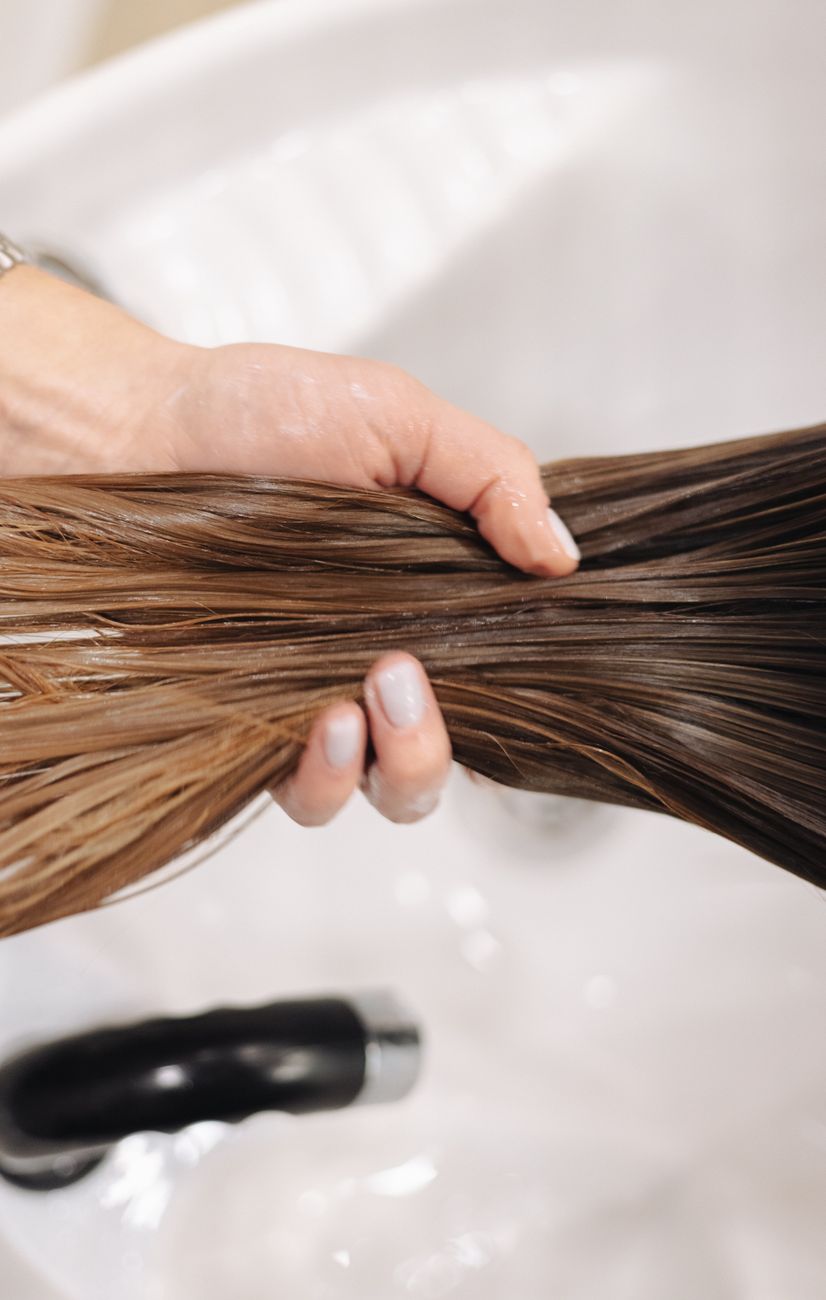
Dry, brittle ends are one of the most common signs that hair needs a more thoughtful care routine. Hair may feel rough, snap easily during detangling, develop split ends, or lose its natural movement and flexibility.
When hair lacks elasticity, the solution isn’t always simply adding more moisture. Dryness, chemical processing, heat exposure, mechanical stress, and product buildup can all affect how the hair feels and behaves.
At OP Hair Salon in Overland Park, we help clients identify what’s contributing to brittle ends and create personalized strategies involving conditioning, trims, styling adjustments, and professional treatments.
What Is Hair Elasticity?
Hair elasticity refers to the hair fiber’s ability to stretch and return toward its original shape without breaking.
Healthy-feeling hair generally has a balance of:
- Strength
- Flexibility
- Moisture
- Resilience
When hair becomes overly dry or structurally compromised, it may feel stiff, rough, or fragile.
What Do Dry, Brittle Ends Look Like?
You may notice:
- Rough ends
- Split ends
- Tiny broken pieces
- Frizz
- Excessive tangling
- Reduced shine
- Hair snapping during brushing
- Uneven-looking lengths
- Difficulty holding a smooth style
These signs can have multiple causes.
Why Do Ends Become Brittle?
The ends are the oldest part of your hair.
They have experienced more:
- Washing
- Brushing
- Heat
- Sun exposure
- Color services
- Chemical treatments
- Friction
- Environmental stress
As hair gets longer, the ends have simply had more opportunities to become worn.
Chemical Processing Can Affect Elasticity
Bleaching, highlighting, permanent color, relaxing, perming, and other chemical services can change the structure and porosity of the hair.
Repeated or overlapping chemical processing may contribute to:
- Dryness
- Roughness
- Increased porosity
- Reduced flexibility
- Breakage
This is particularly important for previously lightened hair.
Heat Can Contribute to Brittle Ends
Repeated exposure to high temperatures from:
- Flat irons
- Curling irons
- Hot brushes
- Blow dryers
can contribute to dryness and surface damage.
The combination of frequent heat and chemically treated hair can be particularly stressful.
Mechanical Damage Matters Too
Hair doesn’t only become damaged through chemicals and heat.
Everyday mechanical stress can contribute to breakage.
Common sources include:
- Aggressive brushing
- Tight hairstyles
- Rough towel drying
- Detangling knots forcefully
- Repeated friction against clothing
- Sleeping with loose, tangled hair
Small amounts of stress repeated every day can accumulate.
Step 1: Identify the Cause Before Adding More Products
Before buying another treatment, consider your recent hair history.
Ask:
- Have I recently bleached my hair?
- Do I use heat frequently?
- Am I brushing aggressively?
- Are my ends splitting?
- Have I recently changed color?
- Do I wear tight hairstyles?
- Could product buildup be making the hair feel rough?
Understanding the cause is more useful than simply adding more conditioner.
Step 2: Get a Professional Hair Assessment
A stylist can evaluate:
- Elasticity
- Porosity
- Breakage
- Split ends
- Chemical history
- Overall condition
This can help determine whether your hair primarily needs moisture, strengthening support, a trim, reduced processing, or a combination.
Step 3: Trim Severely Damaged Ends
Conditioning products can temporarily improve the feel of damaged hair, but they cannot permanently reconstruct a split end.
If your ends are severely split or breaking, trimming may be necessary.
A professional can remove the most compromised sections while preserving as much length as possible.
Step 4: Don’t Confuse Trimming With Faster Growth
A haircut doesn’t make hair grow faster from the scalp.
Its purpose is to remove damaged ends and improve the overall condition and appearance of the existing hair.
For clients trying to grow longer hair, strategic trimming can support length retention by reducing the amount of damaged hair that continues to break.
Step 5: Add Consistent Conditioning
A good conditioner can improve:
- Slip
- Softness
- Detangling
- Manageability
- Surface smoothness
Apply it thoroughly through the mid-lengths and ends.
Step 6: Use a Deep-Conditioning Treatment
If your ends feel especially dry, a weekly or otherwise appropriate deep-conditioning treatment may help improve their feel.
Look for a formula suited to your:
- Hair texture
- Density
- Porosity
- Chemical history
More conditioning isn’t always better, particularly for fine hair.
Step 7: Understand Moisture vs. Strength
Dryness and structural weakness aren’t identical problems.
A moisturizing treatment may improve softness and manageability.
A strengthening or protein-containing treatment may be useful for some chemically processed hair.
Your hair may need one, the other, or a balanced combination.
Step 8: Don’t Overuse Protein
Protein-containing products can be helpful for some damaged hair, but using them excessively isn’t necessarily beneficial.
If your hair starts feeling:
- Stiff
- Hard
- Rough
- Less flexible
talk with your stylist about adjusting the routine.
Step 9: Use a Leave-In Conditioner
A leave-in product can help provide additional slip and manageability between washes.
Apply primarily where your hair needs it most, usually the mid-lengths and ends.
Fine hair may require only a small amount.
Step 10: Add a Small Amount of Hair Oil
A lightweight oil or serum can help smooth the surface of dry-looking ends and improve shine.
Use a small amount.
Oil can improve the feel and appearance of hair, but it cannot permanently repair structural damage.
Step 11: Protect Your Ends From Heat
If you use thermal styling tools, apply a suitable heat protectant before styling.
Also consider:
- Lowering the temperature
- Reducing styling frequency
- Avoiding repeated passes
- Allowing hair to dry before using hot tools when appropriate
Heat protection works best when combined with sensible heat exposure.
Step 12: Reduce Flat-Iron and Curling-Iron Frequency
If your ends are already brittle, give them a break from frequent high-temperature styling.
Experiment with:
- Air-drying
- Heatless curls
- Braids
- Rollers
- Low-heat blowouts
Reducing repeated heat exposure can help minimize additional stress.
Step 13: Be Gentle When Hair Is Wet
Wet hair can be more vulnerable to mechanical stress.
After washing:
- Gently squeeze out water.
- Avoid vigorous towel rubbing.
- Use a suitable towel or hair wrap.
- Detangle carefully.
- Start at the ends and work upward.
Step 14: Use a Wide-Tooth Comb When Appropriate
A wide-tooth comb can be useful for detangling curly, wavy, or easily tangled hair.
Work through small sections rather than pulling through large knots.
Step 15: Protect Hair While Sleeping
Nighttime friction can contribute to tangling and roughness.
Consider:
- Satin or silk pillowcases
- Satin bonnets
- Loose braids
- Loose protective styles
Avoid tight elastics that repeatedly stress the same areas.
Step 16: Reduce Tight Hairstyles
Repeated tension from tight ponytails, buns, braids, or extensions can contribute to mechanical stress.
Rotate hairstyles and avoid constantly pulling the same sections tightly.
Step 17: Protect Your Hair From the Sun
UV exposure can affect hair’s appearance and condition.
When spending extended periods outdoors, consider:
- Hats
- Appropriate UV-protective hair products
- Additional conditioning
- Reducing unnecessary heat exposure
Color-treated hair may also be more vulnerable to changes in appearance from environmental exposure.
Step 18: Manage Humidity
Humidity can make porous, damaged ends appear frizzier.
A lightweight leave-in conditioner or smoothing product can help improve manageability.
Avoid layering too many products, which can create buildup.
Step 19: Check for Product or Mineral Buildup
Sometimes hair feels rough because of buildup rather than simply needing more conditioner.
Possible contributors include:
- Styling products
- Heavy oils
- Dry shampoo
- Hard-water minerals
If your hair suddenly feels coated or dull, a suitable clarifying or professional cleansing treatment may be appropriate.
Step 20: Be Careful With Color Overlap
If your ends are already fragile, repeatedly applying permanent color or lightener over previously processed sections can increase stress.
Whenever possible, work with your stylist to keep chemical services targeted.
Step 21: Give Bleached Hair Extra Attention
Lightened hair often requires a more deliberate maintenance routine.
Your stylist may recommend a combination of:
- Moisture-focused conditioning
- Bond-supporting care
- Gentle cleansing
- Reduced heat
- Regular trims
- Targeted color services
The exact plan depends on the condition of your hair.
Step 22: Consider Bond-Supporting Treatments
Some professional and at-home products are designed to support the internal structure of chemically treated hair.
These can be useful for certain clients, particularly those with highlighted or bleached hair.
However, they don’t eliminate the need for gentle handling and appropriate conditioning.
Step 23: Don’t Layer Every Treatment at Once
When hair feels damaged, it’s tempting to use:
- Protein masks
- Moisture masks
- Oils
- Bond treatments
- Leave-ins
- Serums
all at once.
This can make it difficult to determine what your hair actually needs.
A simpler routine is often easier to evaluate.
Step 24: Adjust Your Washing Routine
Your shampooing frequency should suit your scalp and hair.
If your lengths are dry, concentrate cleansing on the scalp and avoid aggressively scrubbing the ends.
Follow with conditioner through the lengths.
Step 25: Choose Products Based on Hair Density
Fine hair and coarse hair don’t necessarily need the same products.
Fine Hair
Choose lighter conditioning formulas and use smaller quantities.
Medium Hair
A balanced conditioner may provide sufficient softness.
Coarse Hair
Richer conditioning formulas may be appropriate.
Curly or Coily Hair
Prioritize slip, moisture, and gentle detangling.
Step 26: Understand Porosity
Porosity influences how readily hair absorbs and releases moisture.
Highly porous hair may:
- Absorb products quickly
- Lose moisture quickly
- Frizz easily
- Process differently during color services
Low-porosity hair may be more prone to feeling coated by heavy products.
Your stylist can help assess how your hair responds to products rather than relying solely on generalized porosity tests.
Step 27: Create a Weekly Haircare Ritual
A simple routine can look like:
Wash → Condition → Deep condition when appropriate → Leave-in → Protect → Style gently
On other days:
Refresh → Detangle gently → Protect from friction and heat
Consistency matters more than having a large product collection.
Step 28: Track How Your Hair Responds
Pay attention to changes in:
- Softness
- Flexibility
- Breakage
- Tangling
- Shine
- Frizz
- Split ends
If your hair improves, maintain the routine.
If it becomes heavier, stiffer, or more brittle, reassess the products you’re using.
Step 29: Give Your Hair Time
No treatment can instantly restore severely compromised hair to its original condition.
Improving the appearance and manageability of dry ends is often a gradual process.
The best results come from:
Reduce damage + condition consistently + trim compromised ends + protect new growth.
Step 30: Protect the Healthy Hair That Grows In
Once you improve your routine, protecting new growth becomes just as important as treating existing damage.
Avoid repeating the same habits that caused the original dryness.
Think of haircare as a long-term maintenance process rather than a one-time repair.
Dry Ends and Hair Growth Goals
If you’re trying to grow your hair longer, brittle ends can become a major obstacle.
Your scalp may continue producing new hair, but if the ends repeatedly snap, you may not see much increase in overall length.
This is why length retention is so important.
Dry Ends After Coloring
If your ends become brittle after a color service, tell your stylist.
They can evaluate whether the issue may be related to:
- Overlapping color
- Lightening
- Porosity
- Heat styling
- Home-care routine
Avoid immediately applying another chemical service to “fix” the problem.
Dry Ends After a Haircut
If ends still feel dry after a haircut, the issue may involve ongoing environmental or styling stress.
Consider your:
- Heat routine
- Cleansing routine
- Conditioning
- Chemical services
- Detangling habits
Dry Ends on Curly Hair
Curly and coily hair can experience dryness toward the ends because natural oils may not travel as easily along the bends of the hair.
A routine emphasizing:
- Conditioning
- Leave-in products
- Gentle detangling
- Low-friction styling
may improve manageability.
Dry Ends on Gray Hair
Gray hair can sometimes feel more wiry or coarse.
If your gray ends feel brittle, a conditioning-focused routine may help improve softness.
If the texture changes suddenly or significantly, discuss it with your stylist or an appropriate healthcare professional.
When to See a Professional
Consider a salon consultation if your ends are:
- Breaking frequently
- Extremely tangled
- Severely split
- Chemically overprocessed
- Difficult to style
- Becoming progressively thinner
A stylist can determine how much damage can realistically be managed and whether a trim or treatment plan is appropriate.
When to Seek Medical Advice
Hair breakage is different from changes in scalp hair growth or shedding.
If you notice sudden or unexplained hair loss, significant thinning, scalp changes, or other persistent concerns, consult a qualified healthcare professional.
Common Mistakes With Brittle Ends
Expecting One Mask to Repair Everything
Haircare is cumulative.
Avoiding All Trims
Severely split ends won’t permanently repair themselves.
Using Excessive Heat
More heat can undo your progress.
Overusing Protein
Strengthening products aren’t automatically better in large quantities.
Applying Heavy Oils Instead of Conditioning
Oil can smooth the surface but doesn’t replace conditioning.
Repeatedly Coloring the Ends
Unnecessary chemical overlap can increase stress.
Detangling Aggressively
Mechanical damage can quickly worsen fragile ends.
The Goal Is Flexible, Manageable Hair
Restoring the feel of elasticity isn’t about making damaged hair “brand new.”
It’s about improving the condition and manageability of the existing hair while protecting healthier growth moving forward.
A successful routine combines:
Conditioning + gentle handling + heat protection + strategic trims + thoughtful chemical maintenance.
Why Choose OP Hair Salon?
At OP Hair Salon in Overland Park, our stylists can assess dry, brittle, or chemically processed ends and help you create a practical plan for improving their appearance and manageability.
Whether your hair has been highlighted, colored, heat styled, chemically treated, or simply feels dry from everyday wear, we can recommend appropriate trims, conditioning services, bond-supporting care, and home-maintenance strategies.
Ready to give dry, brittle ends a fresh start? Schedule a consultation at OP Hair Salon in Overland Park to develop a personalized plan for stronger-feeling, softer, healthier-looking hair.
Leave a Reply