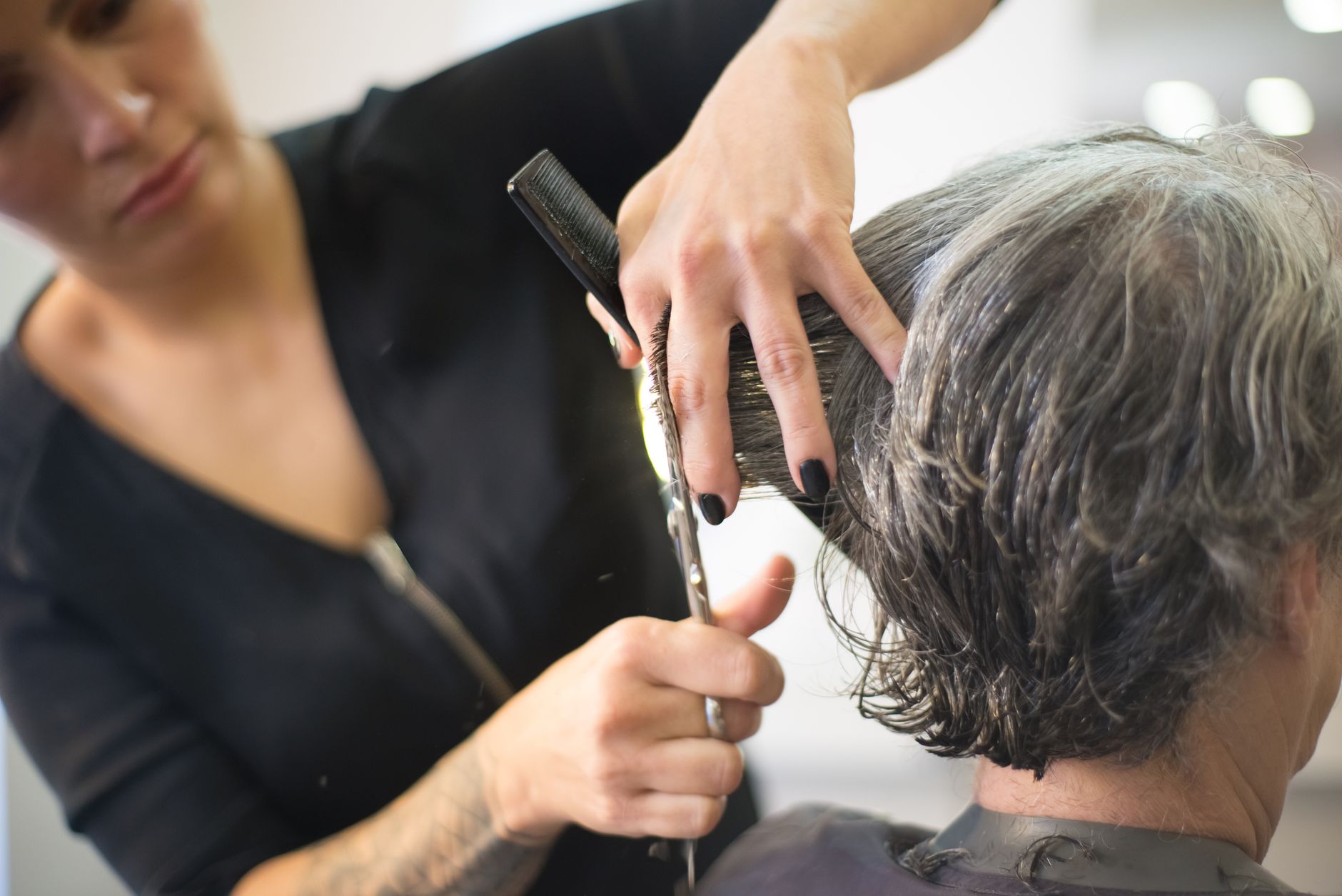
Gray hair doesn’t have to be completely covered to look polished, dimensional, and intentional. For many clients, a shadow root can soften the contrast between natural gray regrowth and colored lengths while creating a more seamless, low-maintenance transition.
Rather than creating a sharp line between the roots and the rest of the hair, a customized shadow root introduces a slightly deeper or more blended tone near the scalp. This creates visual depth and helps connect the natural root area with the rest of the color.
At OP Hair Salon in Overland Park, our stylists can customize shadow roots for gray blending, blondes, brunettes, silver hair, and dimensional color based on your natural level, gray percentage, existing color, and maintenance goals.
What Is a Shadow Root?
A shadow root is a color technique that creates a slightly deeper or more dimensional root area before gradually transitioning into the lighter or differently toned lengths.
The effect can look like:
Natural gray → soft shadow → dimensional lengths
Instead of a hard line, the transition is intentionally softened.
Shadow Root vs. Root Color
These techniques aren’t always the same.
Traditional Root Color
Usually focuses on matching or covering the new growth.
Shadow Root
Creates a deliberately deeper or blended root area that transitions into the lengths.
A shadow root can therefore be used as a design technique rather than simply a gray-coverage service.
Why Use a Shadow Root for Gray Hair?
Gray regrowth can create strong contrast when the lengths are significantly darker or lighter.
A shadow root can help:
- Soften the root-to-length transition
- Reduce visible contrast
- Add dimension
- Create a more natural grow-out
- Connect gray roots with colored lengths
- Reduce the appearance of a harsh demarcation line
The goal is not necessarily to hide every gray strand.
Shadow Roots and Gray Blending
Gray blending is designed to soften the contrast between natural gray and pigmented hair.
A shadow root can complement this approach by creating a controlled transition near the scalp.
For example:
Natural silver + soft shadow + lighter dimensional lengths
can create a much softer visual progression than:
Silver roots + solid dark lengths
Who Can Benefit From a Shadow Root?
A shadow root may be worth considering if you have:
- Growing gray roots
- Blonde hair with gray regrowth
- Highlights
- Balayage
- Lived-in color
- Silver hair
- Darker lengths with lighter roots
- A noticeable root demarcation line
Your stylist can determine whether the technique suits your specific color history.
Shadow Roots for Blonde Hair
Blonde clients often use shadow roots to create a softer transition between natural roots and lightened lengths.
When gray is mixed into the natural root, a carefully chosen shadow can help connect the two areas.
Possible root tones include:
- Neutral beige
- Soft ash
- Mushroom
- Taupe
- Natural blonde
- Soft gray
The ideal choice depends on the blonde and the existing gray.
Shadow Roots for Silver Hair
If your goal is to embrace natural silver, a shadow root can add depth without eliminating the silver completely.
A slightly deeper gray or neutral tone near the root can create:
White → silver → gray dimension
rather than a completely uniform white or silver result.
Shadow Roots for Brunettes Transitioning to Gray
This can be especially useful during a gray transition.
Instead of repeatedly covering new growth with dark permanent color, your stylist may create a softer relationship between:
Natural gray roots + dimensional brunette lengths
Over time, the color strategy can be adjusted as more natural gray becomes visible.
Shadow Roots for Salt-and-Pepper Hair
Natural salt-and-pepper hair already contains contrast between dark and silver strands.
A subtle shadow root can enhance that pattern rather than eliminating it.
The goal is often to make the contrast appear intentional and dimensional.
Shadow Roots for White Hair
White hair can sometimes look extremely bright against darker lengths.
A soft gray or neutral shadow can create a gradual transition.
This can make the overall color appear more dimensional while preserving the brightness of the white hair.
Choosing the Right Shadow Root Tone
The root shade shouldn’t automatically be the darkest possible color.
Your stylist may consider:
- Natural root level
- Gray percentage
- Length color
- Skin undertone
- Desired contrast
- Maintenance goals
- Hair history
A subtle difference in depth can often create a more seamless result.
Cool Shadow Roots
Cool shadow roots may include:
- Ash
- Smoky gray
- Mushroom
- Cool taupe
- Soft charcoal
These can complement silver, ash blonde, and cooler brunette tones.
Neutral Shadow Roots
Neutral shades can create a softer transition without strongly emphasizing warmth or coolness.
Examples include:
- Natural brown
- Neutral dark blonde
- Beige
- Soft taupe
These can be useful when the overall color contains a mixture of warm and cool tones.
Can Warm Shadow Roots Work With Gray Hair?
Yes, but they should be carefully customized.
Soft beige, neutral caramel, or muted warm brunette can sometimes complement warmer complexions and brunette lengths.
However, overly orange or copper roots may clash with natural silver.
Shadow Roots Don’t Have to Cover All Gray
One advantage of a shadow-root approach is that the stylist can leave selected silver strands visible.
This can create a more dimensional result.
For clients embracing gray, the goal may be:
Blend the contrast, not erase the gray.
Shadow Roots vs. Full Gray Coverage
Full Coverage
Designed to cover gray as completely as possible.
Gray Blending
Softens the transition between gray and pigmented hair.
Shadow Root
Creates a deliberate tonal transition near the scalp.
These techniques can sometimes be combined depending on your desired result.
Shadow Roots Can Make Grow-Out More Forgiving
One reason clients choose shadow roots is the softer grow-out.
When the root transition is intentionally blended, new growth may be less visually dramatic than it would be against a solid, high-contrast color.
This can help clients who want fewer frequent appointments.
Low-Maintenance Gray Transition
If you’re considering moving away from frequent gray coverage, a shadow-root strategy can be part of a larger transition plan.
Your stylist may combine:
- Gray blending
- Highlights
- Lowlights
- Shadow roots
- Glossing
- Strategic trimming
The goal is to gradually create a color that works with your natural gray.
Shadow Roots With Highlights
Highlights and shadow roots often work well together.
The highlights create brightness while the shadow root provides depth near the scalp.
The combination can produce:
Depth at the root + brightness through the lengths
This is particularly effective for dimensional blondes.
Shadow Roots With Lowlights
Lowlights can add depth throughout the lengths while the shadow root connects that dimension to the scalp.
This can be useful when gray hair looks too uniform or lacks visual movement.
Shadow Roots With Balayage
Balayage is already designed around a softer transition.
Adding a shadow root can further enhance the lived-in effect.
This can be particularly appealing for clients who want:
- Less obvious regrowth
- Dimensional blonde
- Softer gray transitions
- Longer intervals between appointments
Why Porosity Matters
Previously lightened hair can absorb color differently from natural hair.
If the lengths are porous, a shadow-root formula may appear different as it moves onto the more processed sections.
Your stylist may adjust:
- Formula
- Processing time
- Application
- Placement
to create a more consistent transition.
Hair History Is Important
Before a shadow-root service, tell your stylist about previous:
- Box dye
- Permanent color
- Demi-permanent color
- Bleach
- Highlights
- Balayage
- Toners
- Fashion colors
- Henna
Previous pigment can affect the final result.
What Happens During a Shadow-Root Appointment?
1. Consultation
Your stylist discusses your desired level of gray coverage and dimension.
2. Hair Assessment
The hair is evaluated for:
- Natural level
- Gray percentage
- Porosity
- Texture
- Existing color
- Overall condition
3. Color Mapping
The stylist determines where the root shadow should begin and how far it should transition.
4. Formula Selection
A customized shade is selected to complement the lengths.
5. Strategic Application
The root formula is applied carefully to create the desired depth.
6. Blending
The transition is softened so there isn’t an obvious horizontal line.
7. Glossing or Toning
Additional tonal refinement may be performed if necessary.
8. Final Styling
The hair is styled to reveal how the root shadow works with the overall color.
Why Application Technique Matters
A shadow root isn’t simply “darkening the roots.”
The transition needs to be controlled.
Too much product or too sharp a line can create another demarcation point.
The stylist may use different application patterns depending on:
- Haircut
- Texture
- Parting
- Existing highlights
- Desired contrast
Shadow Roots for Fine Gray Hair
Fine hair can sometimes look flat with a single all-over tone.
A subtle shadow root can add visual depth near the scalp without making the hair appear heavily colored.
The result should remain soft rather than overly dark.
Shadow Roots for Thick Gray Hair
Thicker hair may allow more visible tonal variation.
Strategic placement can create depth between layers and help prevent the overall color from looking too uniform.
How Often Does a Shadow Root Need Maintenance?
The maintenance schedule depends on:
- Hair growth
- Contrast
- Natural gray percentage
- Root depth
- Color placement
- Desired appearance
A softly blended shadow may allow more flexibility than a highly contrasting root.
Your stylist can recommend a schedule based on your individual color.
Can a Shadow Root Be Low Maintenance?
Yes.
One of the primary reasons clients choose the technique is to create a softer grow-out.
However, it doesn’t mean the color requires no maintenance.
You may still need periodic:
- Glosses
- Gray blending
- Root refreshes
- Highlights
- Lowlights
The exact schedule depends on your goals.
Glossing Can Keep the Transition Fresh
A gloss can refresh the overall tone without necessarily recreating the entire color service.
It may help:
- Add shine
- Refresh faded lengths
- Refine warmth
- Enhance silver
- Maintain tonal balance
This can be useful between larger appointments.
Home Care for Shadow-Rooted Gray Hair
To maintain the result:
- Use color-safe shampoo and conditioner.
- Avoid excessive heat styling.
- Use heat protection.
- Condition regularly.
- Protect hair from prolonged UV exposure.
- Follow your stylist’s toning recommendations.
- Avoid unnecessary at-home permanent color.
Good maintenance can help preserve the softness of the transition.
Purple Shampoo and Shadow Roots
Purple shampoo can help reduce unwanted yellow tones in blonde or silver lengths.
However, it doesn’t necessarily belong in every gray-maintenance routine.
Overuse may make some shades look overly cool or dull.
Ask your stylist whether purple shampoo is appropriate for your particular combination of root and length tones.
Common Shadow-Root Mistakes
Making the Root Too Dark
A dramatic root can create the exact contrast you’re trying to soften.
Creating a Hard Line
A shadow root should generally transition rather than stop abruptly.
Ignoring the Lengths
The root must work with the existing color.
Applying One Formula Everywhere
Porosity and previous color can vary throughout the head.
Repeatedly Coloring the Lengths
Unnecessary overlap can create buildup.
Trying to Match Natural Gray With One Shade
Gray hair often contains multiple tones and levels.
Questions to Ask Your Stylist
Before your appointment, ask:
- Would a shadow root help blend my gray?
- Should I keep some of my natural silver visible?
- What root tone would complement my lengths?
- Would gray blending work better than full coverage?
- How much contrast should we create?
- How often will I need maintenance?
- Would highlights or lowlights improve the result?
- Can we create a softer grow-out?
Is a Shadow Root Right for Your Gray Transition?
A shadow root may be a good option if you want to:
- Reduce visible root contrast
- Preserve some natural gray
- Add dimension
- Create a softer grow-out
- Transition away from solid gray coverage
- Make blonde or silver hair look more dimensional
It may not be appropriate for every color situation, especially when substantial corrective work is needed.
The Goal Is a Seamless Transition
A successful shadow root shouldn’t look like a separate block of dark color.
Instead, it should create a gradual visual progression:
Natural gray → soft root dimension → blended mid-lengths → finished color
The technique can help make gray feel intentional, sophisticated, and easier to maintain.
Why Choose OP Hair Salon?
At OP Hair Salon in Overland Park, our stylists specialize in customized gray blending, dimensional color, and low-maintenance color strategies.
We evaluate your natural gray pattern, existing color, hair history, porosity, complexion, and maintenance goals before determining whether a shadow root is the right approach. Whether you’re transitioning to natural silver, softening gray regrowth, or creating a dimensional blonde or brunette, we’ll build a personalized plan around your hair.
Ready to soften the contrast between your gray roots and colored lengths? Schedule a consultation at OP Hair Salon in Overland Park to explore a customized shadow-root and gray-blending strategy.
Leave a Reply