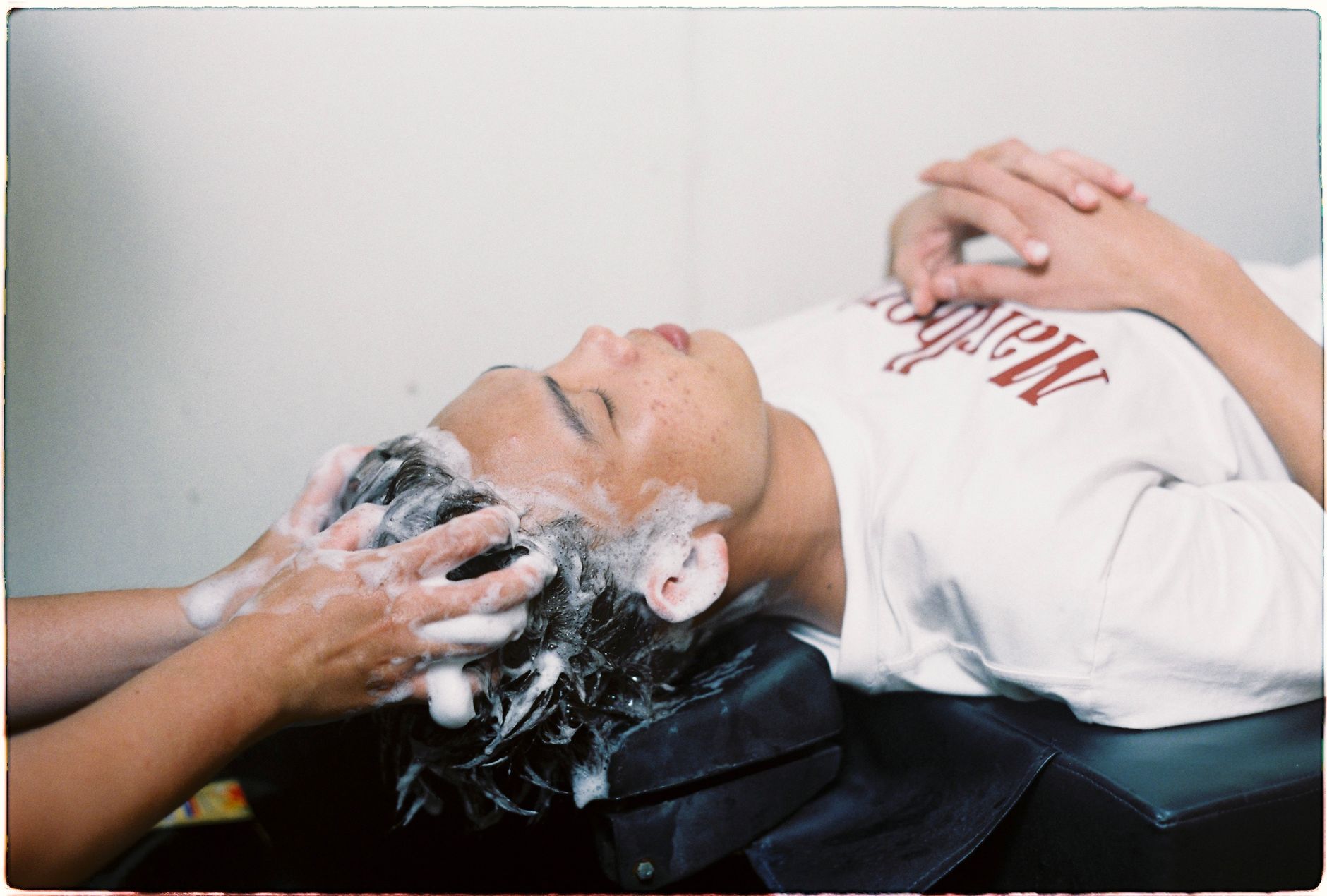
Bleach touch-ups can create beautiful, bright results, but the scalp may sometimes feel warm, tight, tender, itchy, or uncomfortable afterward. Because lightening services involve chemical products applied close to the scalp, post-service scalp comfort should always be taken seriously.
A mildly sensitive feeling can occur after a chemical service, but significant burning, swelling, blistering, or persistent pain should never be treated as something to simply tolerate.
At OP Hair Salon in Overland Park, we prioritize careful consultations, appropriate application techniques, and thoughtful aftercare when working with lightened hair and scalp-adjacent services.
Why Can the Scalp Feel Sensitive After Bleach?
Scalp bleach contains ingredients designed to lighten pigment in the hair. When applied close to the scalp, the skin can be exposed to the chemical service as well.
Temporary sensitivity may be influenced by:
- The lightening formula
- Processing time
- Developer strength
- Application technique
- Previous lightening services
- Scalp condition before the appointment
- Recent scratching or irritation
- Individual skin sensitivity
Everyone’s scalp can respond differently.
Mild Sensitivity vs. Concerning Symptoms
It’s important to distinguish temporary sensitivity from symptoms that may require medical attention.
Mild Symptoms
Some clients may experience temporary:
- Warmth
- Mild tightness
- Slight sensitivity
- Temporary dryness
These symptoms should be discussed with your stylist if they occur.
More Concerning Symptoms
Seek appropriate medical advice if you experience:
- Intense or worsening burning
- Significant pain
- Swelling
- Blistering
- Open or weeping areas
- Severe redness
- Hives
- Facial swelling
- Difficulty breathing
Severe symptoms should not be managed with home hair products.
Step 1: Tell Your Stylist About Scalp Sensitivity
Communication should begin before your bleach service.
Tell your stylist if you have previously experienced:
- Burning during lightening
- Persistent itching
- Redness
- Irritation
- Sensitivity to hair color
- Reactions to cosmetic products
This information can help your stylist determine whether a scalp-adjacent service is appropriate.
Step 2: Avoid Scratching Before Your Appointment
Scratching can create tiny areas of irritation or broken skin.
If your scalp is already irritated, tell your stylist before proceeding.
A professional may recommend postponing the service rather than applying lightener to compromised skin.
Step 3: Don’t Assume More Bleach Means a Better Result
Lightening should be performed according to the hair’s condition and desired result.
Leaving a lightener on longer than appropriate isn’t a safe shortcut to a brighter blonde.
Professional application involves monitoring the hair and following the product’s instructions.
Step 4: Follow Your Stylist’s Immediate Aftercare Instructions
After your appointment, follow the specific recommendations provided by your stylist.
Depending on the service, this may include guidance about:
- When to shampoo
- Which products to use
- How to style the hair
- Heat exposure
- Scalp care
- Follow-up appointments
Your stylist knows which products and techniques were used during the service.
Step 5: Keep the Routine Simple
If your scalp feels sensitive after a bleach touch-up, avoid immediately layering multiple new products onto the scalp.
A simple routine can make it easier to identify what your scalp tolerates.
Avoid experimenting with:
- Essential oils
- Homemade masks
- Strong exfoliants
- Fragranced scalp treatments
- Undiluted oils
- Multiple active ingredients
especially if the skin is already irritated.
Step 6: Be Careful With Fragrance
Some fragranced products can be irritating to sensitive skin.
If your scalp feels uncomfortable, consider using products specifically designed for sensitive skin or follow your stylist’s recommendations.
Step 7: Avoid Aggressive Scalp Scrubbing
Don’t use a scalp scrub or vigorously massage a sensitive scalp immediately after a lightening service.
Mechanical friction can make irritation feel worse.
When washing is appropriate, use gentle fingertip movements rather than scratching with your nails.
Step 8: Choose a Gentle Cleansing Routine
If your stylist says you can wash your hair normally, use a cleanser appropriate for your scalp and hair type.
Avoid aggressively scrubbing the scalp.
Let the shampoo cleanse the area without excessive friction.
Step 9: Condition the Hair, Not Necessarily the Scalp
Bleach can affect the hair fiber, making conditioning important for the lengths.
Apply conditioner primarily through the mid-lengths and ends unless the product is specifically formulated for scalp use.
This can help improve:
- Softness
- Manageability
- Detangling
- Shine
without unnecessarily coating a sensitive scalp.
Step 10: Avoid Heavy Product Buildup
If your scalp is sensitive, piling on oils, dry shampoo, styling creams, and scalp serums may not be helpful.
Keep the scalp routine simple until it feels comfortable again.
Step 11: Reduce Heat Exposure
Your scalp and hair may both benefit from reduced heat immediately after a chemical service.
Avoid unnecessarily high temperatures from:
- Blow dryers
- Flat irons
- Curling irons
- Hot brushes
If you must blow-dry, use a moderate setting and avoid directing concentrated heat onto the scalp.
Step 12: Don’t Pick at Flaking Skin
If the scalp becomes dry or begins to flake, avoid picking or scratching.
Removing flakes manually can increase irritation and potentially damage the skin.
If flaking persists, seek appropriate professional or medical guidance.
Step 13: Protect Your Scalp From the Sun
A freshly lightened scalp may be more noticeable at the part line.
If you’re spending extended time outdoors, consider wearing a hat or otherwise protecting your scalp from excessive sun exposure.
Step 14: Avoid Tight Hairstyles
Tight ponytails, buns, braids, and extensions can create additional tension on an already sensitive scalp.
Choose loose styles until your scalp feels comfortable.
Step 15: Be Cautious With Dry Shampoo
Dry shampoo can be convenient between washes, but it may not be ideal for every sensitive scalp.
If your scalp is already uncomfortable, avoid automatically adding more product simply to extend time between washes.
Follow your stylist’s recommendations.
Step 16: Don’t Use Essential Oils Directly on an Irritated Scalp
Essential oils are highly concentrated substances and can irritate some skin types.
Never assume that a “natural” ingredient is automatically appropriate for irritated skin.
If you’re considering a scalp treatment, ask a qualified professional first.
Step 17: Avoid DIY Acidic or Homemade Treatments
Lemon juice, vinegar, baking soda, and other homemade scalp remedies can alter the skin environment and may increase irritation.
A sensitive scalp generally benefits from a simple, predictable routine rather than experimentation.
Step 18: Give Your Scalp Time to Recover
If the scalp is mildly sensitive but there are no concerning symptoms, minimizing unnecessary manipulation can help you avoid making the irritation worse.
Avoid:
- Scratching
- Scrubbing
- Tight hairstyles
- Excessive heat
- Multiple new products
Follow your stylist’s aftercare instructions.
Bleach Touch-Ups and Overlapping Lightener
One of the most important considerations during root lightening is avoiding unnecessary overlap onto previously lightened hair.
Repeatedly processing already-lightened areas can increase the risk of hair damage.
Professional application focuses on the new growth that actually needs lightening.
Why New Growth Can Process Differently
Hair close to the scalp may process differently because of scalp heat.
The warmth of the scalp can influence how quickly lightener develops.
This is one reason precise application and careful monitoring are important during root touch-ups.
What If Your Scalp Feels Warm During the Service?
Some warmth can occur during chemical processing, but you should tell your stylist immediately if you experience:
- Burning
- Significant discomfort
- Increasing pain
- Strong itching
- Unusual sensations
Never feel that you have to remain silent because the appointment is already underway.
Your stylist can evaluate the situation and determine the appropriate next step.
What If Your Scalp Burns During Bleaching?
If you experience significant burning during a bleach service, tell your stylist immediately.
The appropriate response depends on the product, symptoms, and circumstances.
Do not attempt to tolerate severe discomfort simply to finish the appointment.
Can You Bleach an Already-Irritated Scalp?
A compromised or irritated scalp may not be an appropriate surface for a chemical lightening service.
Tell your stylist about any:
- Scratches
- Sunburn
- Sores
- Irritation
- Recent chemical reactions
before your appointment.
Your stylist may recommend postponing the service.
Patch Testing and Allergy Awareness
Some hair-color products can cause allergic reactions.
If your salon or product manufacturer recommends a patch test, follow those instructions carefully.
A patch test can be part of an allergy-safety protocol, but it does not guarantee that a reaction cannot occur during a future service.
Always tell your stylist about previous reactions to hair-color or lightening products.
Don’t Assume a Previous Reaction Will Stay the Same
A person who previously tolerated a product can potentially react differently later.
That is why communicating your complete color history and previous reactions is important.
Scalp Sensitivity After Multiple Bleach Sessions
Repeated lightening appointments can make scalp comfort an important part of service planning.
Your stylist may consider:
- The condition of the scalp
- The amount of new growth
- Previous lightening history
- Hair integrity
- Desired level of blonde
- Timing between appointments
Sometimes the healthiest choice is to adjust the schedule rather than continually pushing for faster results.
Caring for the Hair After a Bleach Touch-Up
Scalp care is only one part of post-lightening maintenance.
Your hair may also benefit from:
- Gentle cleansing
- Regular conditioning
- Deep-conditioning treatments
- Heat protection
- Minimal chemical overlap
- Strategic trims
- Professional color maintenance
Why Hair Health and Scalp Comfort Go Together
A successful blonding service isn’t just about achieving a lighter shade.
It should also consider:
Scalp comfort + hair integrity + color result + long-term maintenance.
A beautiful blonde result is more sustainable when the underlying hair and scalp are treated thoughtfully.
A Simple Post-Bleach Routine
Immediately After the Appointment
- Follow your stylist’s instructions.
- Avoid unnecessary scalp manipulation.
- Don’t add multiple new products.
At Your Next Wash
- Use an appropriate gentle cleanser.
- Massage lightly.
- Condition the lengths thoroughly.
- Avoid aggressive towel drying.
Between Appointments
- Minimize excessive heat.
- Avoid tight hairstyles.
- Maintain regular conditioning.
- Follow your recommended color schedule.
Common Mistakes After a Bleach Touch-Up
Scratching the Scalp
This can increase irritation.
Applying Heavy Oils Immediately
More product isn’t automatically more soothing.
Using Essential Oils Undiluted
Concentrated essential oils can irritate skin.
Exfoliating a Sensitive Scalp
Scrubs can create additional friction.
Using Excessive Heat
Hot tools can make an uncomfortable scalp feel worse.
Ignoring Severe Symptoms
Significant pain, swelling, blistering, or other concerning symptoms require appropriate medical attention.
When to Contact Your Stylist
Contact your salon if you have questions about:
- Product aftercare
- Shampoo timing
- Styling
- Future touch-ups
- Hair dryness
- Color maintenance
Your stylist can provide service-specific recommendations.
When to Seek Medical Attention
Seek medical attention for symptoms such as:
- Severe or worsening pain
- Significant swelling
- Blistering
- Open or weeping skin
- Widespread rash
- Facial swelling
- Breathing difficulties
- Other severe or rapidly worsening symptoms
A healthcare professional should evaluate suspected chemical burns or allergic reactions.
Preventing Future Scalp Discomfort
At future appointments:
- Tell your stylist about previous sensitivity.
- Mention any recent scalp irritation.
- Avoid scratching before the service.
- Follow recommended preparation instructions.
- Communicate immediately if discomfort occurs during processing.
- Maintain appropriate intervals between lightening services.
Good communication can make a significant difference.
The Goal Is a Beautiful Blonde Without Ignoring Scalp Health
Bleach touch-ups should never be treated as a race.
The healthiest approach considers:
Precise application + appropriate processing + scalp awareness + hair integrity + consistent aftercare.
If your scalp feels mildly sensitive, simplify your routine and follow your stylist’s guidance. If symptoms are severe or persistent, seek appropriate medical care.
Why Choose OP Hair Salon?
At OP Hair Salon in Overland Park, our stylists take a personalized approach to blonde maintenance and root lightening.
We consider your existing color, new growth, hair condition, scalp history, and desired result when planning lightening services. Our goal is to create beautiful blonde results while maintaining thoughtful service practices and realistic maintenance expectations.
Planning your next blonde touch-up? Schedule a consultation at OP Hair Salon in Overland Park and discuss your scalp sensitivity, hair history, and blonde-maintenance goals with your stylist before your next appointment.
Leave a Reply