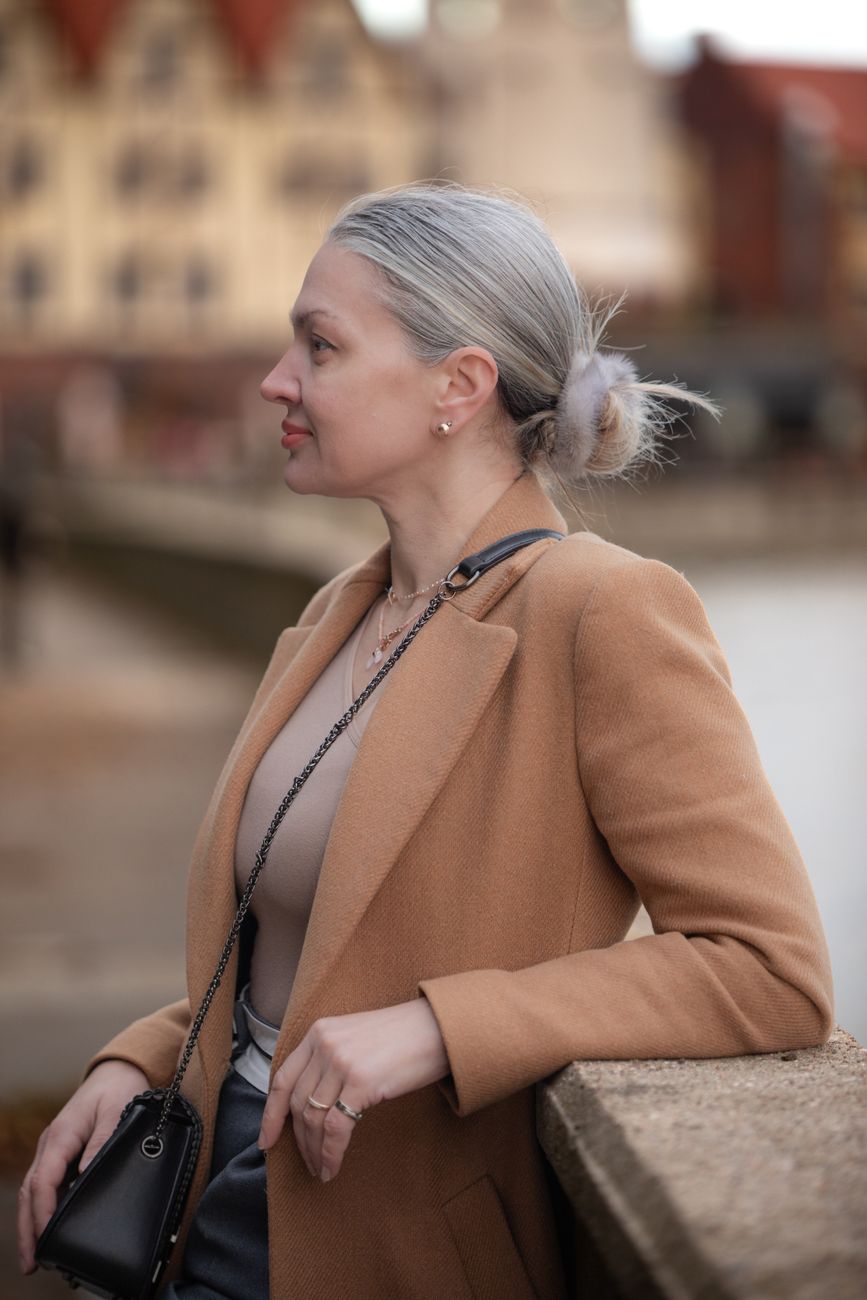
Choosing the right gray-coverage color involves more than deciding how much gray you want to conceal. Warm, cool, and neutral tones can each create a different effect against your complexion, especially as your natural coloring changes over time.
The right shade can add softness, brightness, and dimension. The wrong undertone may make hair look overly flat, brassy, harsh, or dull.
At OP Hair Salon in Overland Park, our stylists consider your natural hair color, percentage of gray, complexion, eye color, hair condition, and maintenance preferences when creating a customized gray-coverage plan.
Understanding Warm, Cool, and Neutral Hair Tones
Hair color has both a depth and an undertone.
Warm Tones
Warm shades typically include:
- Golden blonde
- Honey
- Caramel
- Chestnut
- Copper
- Auburn
- Warm chocolate
Cool Tones
Cool shades may include:
- Ash blonde
- Pearl
- Mushroom brown
- Cool brunette
- Smoky gray
- Silver
Neutral Tones
Neutral shades balance warm and cool characteristics.
Examples include:
- Natural brown
- Beige blonde
- Neutral dark blonde
- Balanced brunette
- Soft natural gray
The most flattering choice depends on your individual coloring rather than your age alone.
Why Undertone Matters for Gray Coverage
As gray becomes more prominent, the overall contrast between your hair and complexion changes.
A very dark or strongly cool shade may create more contrast than you prefer, while an excessively warm shade can sometimes emphasize unwanted redness or sallowness.
A customized formula can help create a more harmonious relationship between your hair and skin.
Warm Hair Color for Gray Coverage
Warm tones can bring richness and softness to gray-covered hair.
Popular options include:
- Warm brunette
- Chestnut
- Golden brown
- Honey blonde
- Caramel
- Soft copper
- Warm auburn
Warm tones may be particularly appealing if you prefer a rich, luminous appearance.
When Warm Tones May Be Flattering
Warm shades can complement complexions with naturally golden, peach, or warm beige characteristics.
They may also add visual richness to brunette or blonde hair that has become dull after repeated color services.
However, warmth should be controlled.
Too much orange, copper, or red can overwhelm the overall look.
Cool Hair Color for Gray Coverage
Cool tones can create a sophisticated, polished appearance.
Options include:
- Ash brown
- Cool espresso
- Mushroom brown
- Ash blonde
- Pearl blonde
- Smoky silver
Cool shades can be especially attractive when they harmonize with naturally cool or rosy undertones.
When Cool Tones May Be Flattering
Cool colors can work well for people whose complexion naturally has pink, rosy, or cool-beige characteristics.
They can also complement naturally silver or white hair when the goal is to enhance rather than hide the coolness of the gray.
Neutral Tones Offer Flexibility
If you don’t want your hair to look distinctly warm or cool, neutral shades can provide a balanced alternative.
Neutral color can be especially useful when:
- You aren’t sure of your skin undertone
- You want a natural appearance
- You prefer subtle color
- You want to avoid excessive warmth
- You don’t want an overly ashy result
Neutral doesn’t have to mean boring. Dimension can be created through strategic highlights, lowlights, and tonal variation.
Does Mature Skin Always Look Better With Warm Hair?
No.
It’s a common assumption that warmer hair automatically looks more flattering as people get older, but that’s not universally true.
Some clients look stunning with:
- Cool silver
- Ash blonde
- Smoky brunette
- Cool beige
- Natural gray
Others may prefer:
- Honey blonde
- Warm chestnut
- Caramel brunette
- Golden beige
Your natural coloring and desired style should guide the decision.
When Very Cool Hair Can Look Too Dull
Extremely ashy color can sometimes make a complexion appear less vibrant.
This may happen when the hair contains too much cool pigment relative to the person’s natural coloring.
Instead of making the entire formula warmer, a stylist may introduce a subtle neutral or warm element to create balance.
When Warm Hair Can Look Too Brassy
Warm and brassy aren’t necessarily the same thing.
Beautiful warmth can include gold, honey, caramel, and controlled copper.
Unwanted brassiness can appear when yellow, orange, or red tones become stronger than intended.
The solution may be tonal balancing rather than eliminating all warmth.
Gray Coverage Doesn’t Have to Mean One Solid Color
Traditional gray coverage can create an even, uniform result.
But dimensional gray coverage can look softer and more natural.
Depending on your goals, your stylist may combine:
- Base color
- Highlights
- Lowlights
- Face-framing pieces
- Glossing
- Gray blending
This allows some variation to remain visible.
Warm vs. Cool Gray Coverage for Brunettes
Brunettes have many possibilities.
Warm Brunette
Consider:
- Chestnut
- Chocolate
- Caramel
- Warm espresso
Cool Brunette
Consider:
- Mushroom brown
- Ash brown
- Cool espresso
Neutral Brunette
A natural or neutral brown can provide coverage without strongly emphasizing either warmth or coolness.
Warm vs. Cool Gray Coverage for Blondes
Blonde gray coverage can also be customized.
Warm Blonde
- Honey
- Golden beige
- Champagne
- Soft caramel
Cool Blonde
- Ash
- Pearl
- Smoky blonde
- Cool beige
Neutral Blonde
- Natural beige
- Soft neutral blonde
Your stylist can adjust the formula based on your existing gray and natural hair level.
What About Redheads?
Warm tones can be especially beautiful on naturally warm complexions and clients who enjoy copper or auburn shades.
But red and copper pigments are visually strong.
Your stylist can adjust the intensity from subtle warmth to richer copper or auburn rather than automatically choosing the strongest red available.
Natural Silver Is Also an Option
Gray coverage doesn’t have to mean covering every silver strand.
You may prefer:
- Gray blending
- Silver enhancement
- Partial coverage
- Root blending
- Dimensional gray
- Natural silver maintenance
This approach can preserve some of your natural gray while reducing unwanted contrast.
Gray Blending vs. Full Coverage
Full Gray Coverage
Designed to cover gray as completely as possible.
Gray Blending
Designed to soften the contrast between gray and pigmented hair while allowing some silver to remain visible.
For clients who want lower maintenance and a natural appearance, gray blending may be worth discussing.
Your Natural Hair Level Matters
The same warm or cool formula won’t look identical on every person.
Your stylist considers your existing level before selecting the target shade.
For example, a cool brown on a naturally dark brunette may create a very different visual effect than the same tonal family on a light brunette.
Your Hair History Matters Too
Always tell your stylist about previous:
- Box dye
- Permanent color
- Demi-permanent color
- Highlights
- Bleach
- Henna
- Fashion colors
- Color-depositing products
Artificial pigment can influence how new gray-coverage color develops.
Why Porosity Affects Gray Coverage
Previously lightened or chemically processed hair may be more porous than virgin hair.
Porous areas can absorb color differently from healthier sections.
This can lead to:
- Overly dark ends
- Excessively cool areas
- Uneven warmth
- Faster fading
Your stylist may adjust the formula or application according to the condition of different sections.
Fine Hair and Gray Coverage
Fine hair can sometimes appear flatter when covered with one opaque color.
Dimensional techniques can introduce visual movement without dramatically changing the overall shade.
Subtle highlights or tonal variation may help create a softer result.
Resistant Gray May Need Specialized Formulation
Not all gray hair behaves the same way.
Some gray strands may be resistant, coarse, or more difficult to saturate.
Your stylist may adjust the formulation, application technique, or processing approach based on how your hair responds.
Face-Framing Color Can Make a Big Difference
The hair around the face has a major influence on the overall appearance of a color.
A stylist may use slightly lighter, softer, warmer, or cooler tones around the face depending on your desired effect.
This doesn’t necessarily mean making the entire head lighter.
Why Dimension Can Be Especially Helpful With Gray Coverage
An all-over opaque shade can sometimes create strong contrast between the colored hair and new gray growth.
Dimension can soften that effect.
For example:
Natural base + subtle highlights + controlled gray coverage + gloss
can create a more blended appearance than one solid color.
What About Very Dark Gray Coverage?
Very dark color can provide strong coverage, but it may also create more noticeable contrast against lighter skin and silver regrowth.
If you want a softer appearance, your stylist may recommend a slightly lighter or more dimensional approach.
Glossing Can Refine Gray-Coverage Color
A gloss can be useful when the hair is already at the desired depth but the tone needs adjustment.
Depending on the formula, glossing can:
- Add shine
- Refresh faded color
- Soften unwanted warmth
- Add subtle warmth
- Refine coolness
- Improve tonal balance
It can be a useful maintenance service between major color appointments.
Purple Shampoo Isn’t Right for Everyone
Purple shampoo can help neutralize unwanted yellow tones in some blonde and silver hair.
But using it too frequently can make certain shades appear excessively cool or dull.
If you’re maintaining a warm gray-coverage color, frequent purple shampoo may also work against the tone you’re trying to preserve.
Ask your stylist whether you need it and how often to use it.
How to Decide Between Warm and Cool Gray Coverage
Think about the overall effect you want.
Consider Warm Tones If You Want:
- Richness
- Golden or caramel dimension
- A softer warm appearance
- Chestnut or auburn depth
- A luminous brunette
Consider Cool Tones If You Want:
- A smoky finish
- Cleaner silver
- Ashy brunette dimension
- A cooler blonde
- A sophisticated, understated appearance
Consider Neutral Tones If You Want:
- A natural result
- Balanced color
- Less obvious warmth
- Less obvious ash
- Flexible maintenance
Don’t Choose Hair Color Based Only on Skin Tone
Skin undertone is useful, but it isn’t the only factor.
Your stylist should also consider:
- Natural hair color
- Eye color
- Gray percentage
- Hair texture
- Haircut
- Porosity
- Existing artificial pigment
- Lifestyle
- Maintenance preferences
The most flattering color is one that works with your complete appearance.
How Lighting Changes Hair Color
Hair can look different in:
- Natural daylight
- Warm indoor lighting
- Cool artificial lighting
- Fluorescent environments
A color that appears neutral indoors may look warmer in sunlight.
Your stylist should consider how the color will look in different everyday environments.
How Often Should Gray Coverage Be Refreshed?
Your maintenance schedule depends on:
- How quickly your hair grows
- Percentage of gray
- Desired coverage
- Contrast between natural and colored hair
- Whether you’re blending or fully covering gray
Gray blending generally allows for a softer grow-out than highly opaque permanent coverage.
Home Care for Gray-Covered Hair
To maintain your chosen tone:
- Use color-safe shampoo and conditioner.
- Condition regularly.
- Use heat protection.
- Minimize excessive heat styling.
- Protect hair from prolonged UV exposure.
- Avoid unnecessary color overlap at home.
- Follow your stylist’s recommended maintenance schedule.
Consistent home care can help preserve both color and shine.
Common Gray-Coverage Mistakes
Choosing Color That’s Too Dark
Very dark color can make regrowth more noticeable.
Using Too Much Ash
Excessive cool pigment can create a dull or muddy appearance.
Adding Too Much Warmth
Too much gold, orange, or red can overwhelm the complexion.
Repeatedly Coloring the Lengths
Applying permanent color over already-colored lengths can create unnecessary buildup.
Ignoring Natural Gray
You may not need to cover every silver strand.
Choosing a Shade Without Considering Maintenance
A dramatic color change may require more frequent appointments than a dimensional or blended approach.
Questions to Ask Your Stylist
Before your next gray-coverage appointment, consider asking:
- Would warm, cool, or neutral tones suit me best?
- Is my current color too dark?
- Would gray blending be better than full coverage?
- Should I keep some silver visible?
- Would highlights add useful dimension?
- Do I need more warmth or less ash?
- Would a gloss be enough to refresh my current color?
- How can we make my regrowth less noticeable?
The Goal Is Balance, Not Simply Covering Gray
The most flattering gray coverage isn’t necessarily the warmest, coolest, lightest, or darkest shade.
It’s the one that creates balance between your:
Hair color + complexion + natural features + desired style + maintenance routine
A thoughtful combination of warm, cool, and neutral tones can create a result that feels polished without looking artificial.
Why Choose OP Hair Salon?
At OP Hair Salon in Overland Park, our stylists create customized gray-coverage and gray-blending services based on your individual coloring and hair history.
We consider your complexion, natural hair level, gray percentage, porosity, texture, previous color, and maintenance preferences before developing a formula. Whether you want full gray coverage, subtle gray blending, a warmer brunette, a cooler blonde, or enhanced natural silver, we’ll help you find an approach that feels natural and flattering.
Not sure whether warm, cool, or neutral tones are right for your gray coverage? Schedule a consultation at OP Hair Salon in Overland Park and create a personalized color plan designed around your features, goals, and lifestyle.
Leave a Reply