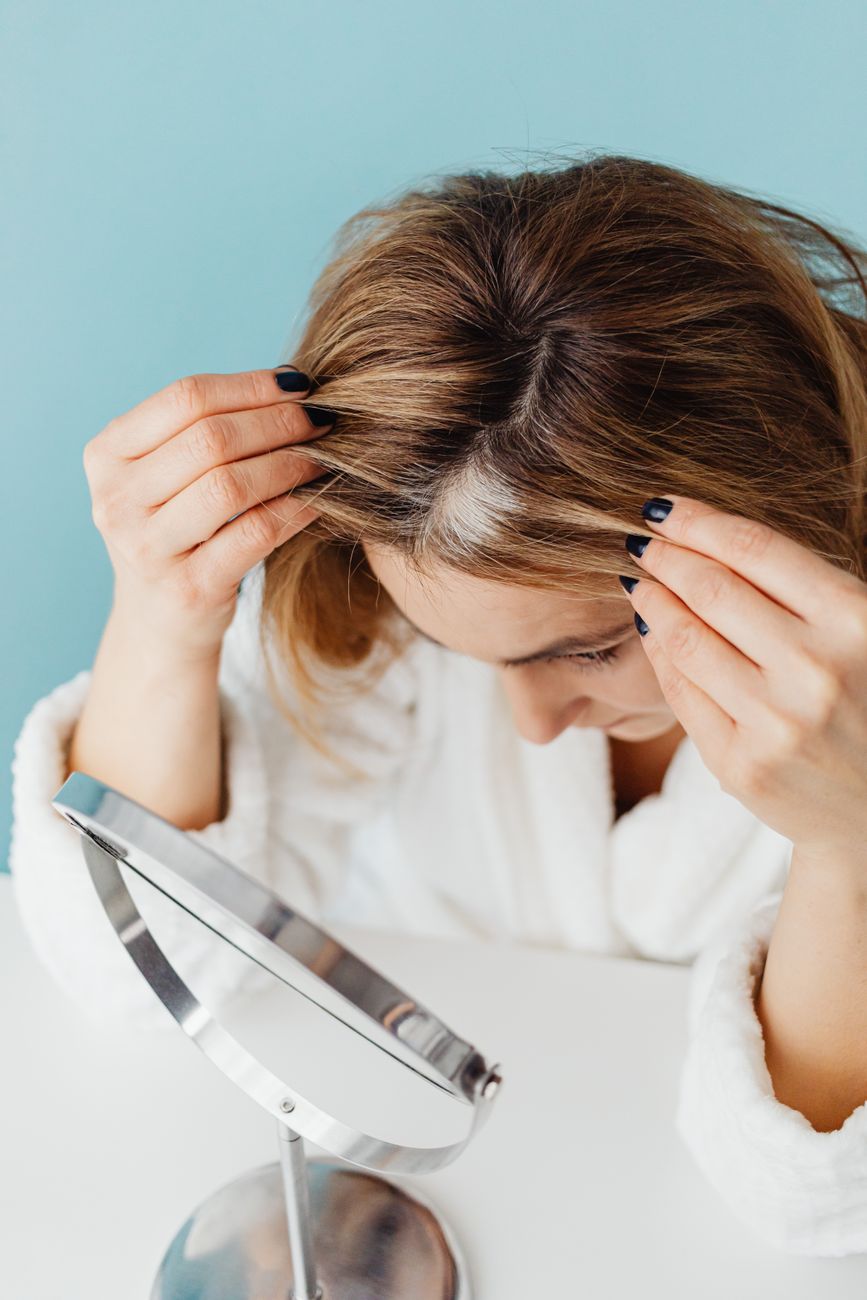
Scalp health and hair growth are closely connected, which is why circulation is often discussed in conversations about hair wellness. The scalp contains a network of blood vessels that supplies oxygen and nutrients to the skin and surrounding tissues.
This has led to interest in scalp massage, cosmetic scalp treatments, and medical therapies that aim to support hair growth. However, it’s important to separate general scalp wellness from proven treatments for hair loss.
At Just For Hair, also known as OP Hair Salon, located at 1170 W 135th St, Overland Park, KS 66221, United States, we believe understanding the scalp is an important part of creating a thoughtful hair-care routine.
What Is Scalp Micro-Circulation?
Micro-circulation refers to blood flow through the body’s smallest blood vessels, including capillaries.
The scalp has its own blood supply, and healthy circulation is important for normal skin and tissue function.
Hair follicles are living structures located within the skin. Their activity depends on a complex combination of biological signals, genetics, hormones, nutrients, and local tissue conditions.
Because of this complexity, simply increasing scalp circulation doesn’t automatically mean that hair will grow more quickly or that existing hair loss will be reversed.
Why Is Circulation Discussed in Hair Growth?
Hair follicles require oxygen and nutrients delivered through the bloodstream.
This basic relationship is one reason circulation appears in discussions about hair growth.
However, hair loss has many possible causes. Genetics, hormonal changes, medical conditions, nutritional deficiencies, medications, inflammation, and other factors can influence follicle activity.
Improving circulation alone isn’t a universal solution.
Can Scalp Massage Improve Circulation?
Gentle scalp massage can temporarily increase the sensation of warmth and may influence local blood flow.
It can also be relaxing and may help reduce the feeling of scalp tension.
However, evidence that routine scalp massage alone produces significant hair regrowth is limited. It should be viewed as a wellness and grooming practice, not a guaranteed hair-loss treatment.
If you enjoy scalp massage, use your fingertips rather than your fingernails and avoid pulling on the hair.
What About Scalp Stimulation Tools?
There are many brushes, massage devices, and other tools marketed for scalp stimulation.
Some may provide a pleasant massage, but more aggressive isn’t necessarily better.
Excessive pressure can irritate the scalp or create unnecessary mechanical stress on the hair.
If you use a scalp-massage tool, follow the manufacturer’s instructions and stop if your scalp becomes sore, irritated, or uncomfortable.
Scalp Treatments at the Salon
Professional scalp treatments can be useful for maintaining a clean, comfortable, well-conditioned scalp.
Depending on the service, salon treatments may include:
- Scalp cleansing
- Conditioning treatments
- Gentle scalp massage
- Exfoliation
- Hydration treatments
- Relaxing scalp-care rituals
These services can improve the feel and appearance of the scalp and hair, but they should not be confused with medical treatment for hair loss.
Medical Hair Growth Therapies Are Different
Some treatments marketed for hair growth have medical evidence for specific types of hair loss.
Depending on the diagnosis, a dermatologist may discuss options such as topical or oral medications, procedures, or other therapies.
The appropriate treatment depends on the cause of the hair loss.
A salon professional cannot diagnose the underlying cause of hair loss, so persistent or significant thinning should be evaluated medically.
Platelet-Rich Plasma and Hair Loss
Platelet-rich plasma, commonly called PRP, is a procedure that has been studied for certain types of hair loss.
PRP involves preparing a patient’s own blood components and injecting a concentrated platelet-containing preparation into the scalp.
Research has shown potential benefits for some people with certain forms of hair loss, but results vary, and PRP isn’t appropriate for everyone.
It should be performed and discussed by qualified medical professionals rather than treated as a routine salon service.
Microneedling and the Scalp
Microneedling involves creating controlled microscopic injuries in the skin.
It has been investigated as a treatment for certain types of hair loss, sometimes in combination with other therapies.
Because it intentionally affects the skin, it isn’t something to casually perform at home or incorporate into a salon scalp treatment without appropriate medical oversight.
A dermatologist can determine whether it is appropriate for a particular condition.
The Importance of Diagnosing Hair Loss
Hair shedding isn’t one single condition.
Different patterns can point toward different causes, including:
- Androgenetic alopecia
- Telogen effluvium
- Alopecia areata
- Traction-related hair loss
- Scalp inflammatory conditions
- Nutritional issues
- Certain medical conditions
Treating the wrong cause may delay effective care.
If you notice a sudden change in shedding or density, getting a professional diagnosis is more useful than simply trying multiple scalp-stimulation products.
Supporting Scalp Health at Home
While no home routine can guarantee hair regrowth, healthy scalp-care habits can support overall comfort and hair maintenance.
Consider:
Gentle cleansing → Appropriate conditioning → Minimal unnecessary irritation → Balanced nutrition → Sun protection → Gentle styling
Avoid aggressive scratching, excessive exfoliation, and hairstyles that repeatedly pull on the roots.
Nutrition and Hair Growth
Hair follicles require adequate nutrients to function normally.
A balanced diet that provides sufficient protein, vitamins, minerals, healthy fats, and fluids supports overall health.
However, taking supplements without a demonstrated deficiency isn’t automatically beneficial and can sometimes be harmful.
If you suspect a nutritional deficiency is contributing to hair loss, discuss appropriate testing with a healthcare professional.
Don’t Confuse Circulation With Hair Follicle Activation
It’s tempting to think of hair follicles like plants that simply need more water and blood flow to grow.
In reality, hair growth is regulated by a sophisticated biological cycle.
Blood flow is one component of follicle function, but it isn’t the only factor determining whether a follicle produces a thick, healthy hair.
This is why claims that a particular massage, oil, or device will “activate dormant follicles” should be approached carefully.
When Should You See a Dermatologist?
Consider professional medical evaluation if you notice:
- Sudden or rapid hair loss
- Bald patches
- A widening part
- Receding areas
- Significant changes in density
- Scalp pain or inflammation
- Persistent itching or scaling
- Hair loss accompanied by other health changes
A dermatologist can evaluate your scalp and hair and determine whether additional testing or treatment is appropriate.
Personalized Scalp Care at Just For Hair
At Just For Hair / OP Hair Salon, our stylists can help you maintain the cosmetic health and appearance of your scalp and hair.
During a consultation, we can discuss your cleansing routine, hair texture, styling habits, chemical services, and general scalp-care needs.
If you’re experiencing unexplained hair loss, we recommend working with a dermatologist or other qualified healthcare professional to identify the cause.
Visit Just For Hair in Overland Park
Looking for professional hair and scalp care in Overland Park, Kansas?
Just For Hair / OP Hair Salon
1170 W 135th St
Overland Park, KS 66221
United States
Learn more about professional hair services at ophairsalon.com.
Healthy circulation is one part of scalp biology, but healthy hair growth depends on much more. The best approach combines gentle scalp care with evidence-based medical evaluation when hair loss becomes a concern.
Leave a Reply